
Cellular Industry:
Time to Take Ownership of Part of the Wireless Infrastructure Poblem

The Commission will consider a Notice of Proposed Rulemaking and Notice of Inquiry that commences an examination of the regulatory impediments to wireless network infrastructure investment and deployment, and how the Commission may remove or reduce such impediments consistent with the law and the public interest. (WT Docket 17-79; WT Docket 15-180)
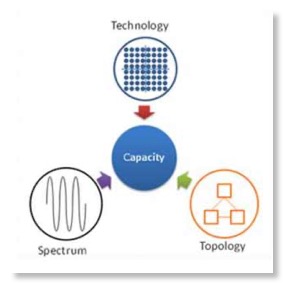
Delays in infrastructure are a major issue in spectrum policy because in reality MOST growth of wireless capacity comes from new infrastructure; the contributions of new technology and new spectrum are minor by comparison - even though both are also needed. But the FCC draft never addresses a basic issue: Why are local government slow in approving new wireless infrastructure?
Let me posit two basic reasons:
- Wireless infrastructure is often needlessly ugly and often designed with little regard for the environment around it.
- Lack of confidence in FCC's RF safety policies and resulting safety fears.

I
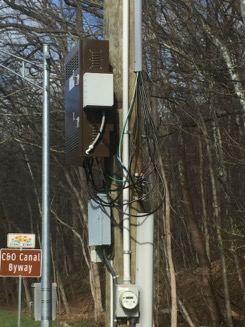
Should the industry have a public strategy on the aesthetics of new 5G infrastructure other than vague talk about "pizza boxes" and pictures of them held by a spokesman, not in actual installations? The proposed Mexican border wall will be generally in remote rural locations but the presolicitation published by DHS clearly states:
"Detailed requirements will be included in the RFP, but for planning we anticipate procuring concrete wall structures, nominally 30 feet tall, that will meet requirements for aesthetics, anti-climbing, and resistance to tampering or damage." (Emphasis added)
While the federal government shouldn't determine aesthetics goals for 5G, shouldn't the industry at least have publicly stated goal for this new ubiquitous addition to our urban design?
Should the public be able to see how well the industry is meeting the goal it sets?
My FCC filing does not oppose any aspect of the draft NPRM the FCC will vote on soon. It does point out that without attention to the two likely root causes of the local government delays this proceeding, like many other before it, will fail to meet its goals.

"All politics is local".
Placing ugly infrastructure on every block in America and preempting local jurisdiction in order to do this could be a good test of whether Tip's famous phrase is still true. Will it result in a major grassroots backlash if implemented as currently structured? Time will tell! Wouldn't it be better (and even more Republican) to defuse part of the problem with non regulatory approaches?
But wouldn't a better approach include voluntary action from the cellular industry with FCC encouragement to pay more attention to the physical design of its infrastructure and its compatibility with its neighbors? While in a few cases there may a need for very expensive custom designs, more attention to design basics like covering or grouping caring and use of paint to minimize the visual impact of equipment will not be major cost factors. However it will need management attention.
As mentioned at the beginning, RF safety concerns are also a factor in local resistance to wireless infrastructure. While I don't think these concerns are valid, the fact that the basic FCC RF safety rules are decades old and that the most recent rulemaking on the topic, Dockets 03-137 and 13-84, have been stalled for years shows apparent FCC apathy on the topic. FCC's partner with shared jurisdiction on RF safety is EPA and the pending severe budget cuts at that agency will make it even more difficult to update RF safety rules to keep them credible. FCC worked closely with the cellular industry to move the Spectrum Frontiers/5G docket at record pace. Both should realize that updated and credible RF safety rules are important to maintaining public confidence in wireless infrastructure - especially as it starts reaching even block in America!
Acceleration of Broadband Deployment by Improving Wireless Facilities Siting Policies
The discussed focused on the urgent need for wireless capacity and the related wireless infrastructure. WE FULLY AGREE!
But there were 2 key points that were not said, perhaps they would be awkward given the influence of the cellular establishment at FCC and in DC in general.
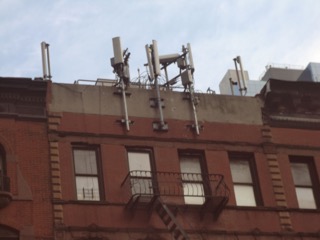
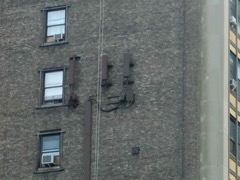
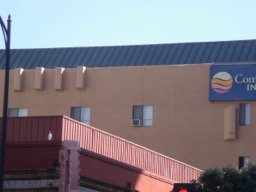
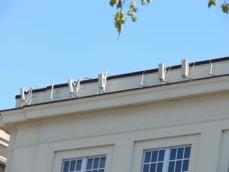
Now the cell industry does sometimes due a good job in designing infrastructure to match its environment. Here are 3 examples of apparently modest cost installations that are reasonable design compromises. Note that in all 3 cases the covers/radomes of the antennas approximately match the surface they are mounted on; in addition there a no loose visually contrasting cables in these last 3 photos:
(In NYC only 2 blocks from the previous photo)

“All politics is local”
There is a limit how much the cellular industry can impose on local jurisdictions at the current ugliness levels without a grassroots political backlash. But well designed infrastructure need not be either ugly or very expensive. More consistent attention to physical design is urgently needed!
UPDATE
PCIA Press Release: PCIA Applauds FCC’s Order on Wireless Infrastructure – Streamlined Rules Will Speed Broadband Deployment
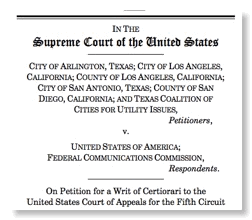
CTIA & PCIA: With SCOTUS Review of FCC "Shot Clock" Decision Pending Shouldn't You Have a "Plan B"

Thanks to the Federal Communications Commission’s (FCC) 2009 shot clock ruling on tower siting, the number of cell sites continues to grow, which are key to providing wireless service in a geographic area. According to the semi-annual survey, there were 28,641 cell sites added this year for a total of 285,561 nationwide.
PCIA’s website and AT&T’s and Verizon’s policy blogs are also silent on the topic. Perhaps everyone is confident that the Supreme Court will uphold the FCC’s implementation of the shot clock rule - but then why did SCOTUS accept the case if it was so obvious?
Buildout of cellular infrastructure is the dominant source of wireless capacity growth despite the constant demands for new spectrum by the major carriers. This wireless capacity growth has numbers benefits for economic growth and international competitiveness. As Preston Marshall said recently at the recent Silicon Flatirons spectrum conference, if you increase mobile spectrum by 50% you basically increase mobile capacity by 50%, not 2000%. Thus timely buildout of infrastructure is key.
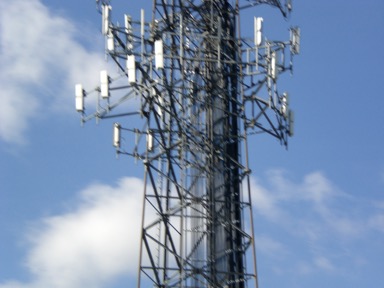
Why Does Infrastructure Have to Look Like it was “Designed by Engineers”?
Tip O’Neill famously said “all politics is local”. The cellular establishment no doubt feels that if they lose this case in the Supreme Court they can just pressure Congress to give them a more favorable law that avoids the problems of the present shot clock rule. Perhaps. But if Tip O’Neill is still correct, members of Congress may well be reluctant to pressure constituents to accept undesired cellular infrastructure in their immediate neighborhoods.
But perhaps the cellular establishment should listen to industry insiders like Previously I reported about the comments of Bechtel VP Jake MacLeod, when he stated at a 2009 FCC broadband hearing that “we have reached the end of the line for current design concepts (for cellular towers).” (Bechtel is a major builder of wireless infrastructure.) Or Alcatel-Lucent Wireless Division President Dr. Wim Sweldens who said
But we also have to be honest that in the mobile industry we are creating some problems. The mobile industry is actually contributing a fair amount to pollution...The mobile industry is also obstructing and cluttering our landscapes and cityscapes with more and more and bigger and bigger and uglier and uglier antennas and towers.
A major part of the opposition to infrastructure in suburbia is the inappropriate design that is normally used. If new design techniques could create the stealth bomber that could fly and be invisible to most radars, it is likely that a bold new design approach could develop new infrastructure designs that perform their intended function yet fit in better with their environment.
This was my point in point #5 of my suggested New Year’s Resolutions for the Cellular Industry - a set of topics that drew no interest from the intended audience.
So, CTIA and PCIA, you don’t have to call or contact me. But I sincerely hope that since an adverse SCOTUS decision in this case will hurt us all that you start thinking about a Plan B that does not just depend on lobbyists, but addresses the root design cause of your problem.
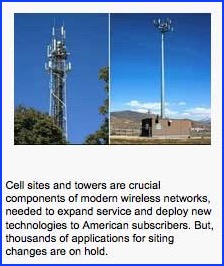 .
.RF Globalnet Article on Cell Base Station Antennas and Their Environment

Last January RF Globalnet, a newsletter for wireless technology types, published an article entitled "Antenna Location Is Not An Architectural Decision: Antenna system design and placement is critical to proper system performance”, by Alfred T. Yerger II of Bird Technologies Group, a frequent contributor to the publication. Mr. Yerger argued that technical issues are the key one in antenna design and shows little interest in architectural issues. He states, “As you can imagine, much of this does not fit well with a landlord’s or building owner’s idea of where the antennas should be placed, or a tower owner’s desire to fill a particular space on the tower.”
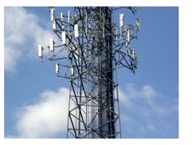
My article ends with“The point of this essay is to emphasize that good engineering is more than about making systems that work in a nominal sense, it is about making systems work in the real world with real constraints such as cost, size, weight, battery life, and compatibility with their environment in the case of systems that are intrusive into their locations as many cellular base stations are. It is this engineering to meet practical constraints which is a key difference between engineers and physicists.”
“Mr. Yerger ends his article with, "Remember, antenna location is not an architectural decision!" Perhaps not, but in the real world, antennas and other engineered systems have to work in the environment in which they are placed. Being compatible with the local environment and acceptable to neighbors is part of that. The cellular operators and suppliers should start making some real efforts to examine base station design for suburbia from a fresh piece of paper and stop focusing on using products in today's catalogs unless forced to do a very expensive custom design. Alcatel-Lucent deserves praise for ‘thinking outside the box’ with their new concept (lightRadio™), whether or not it ever has a significant role. The rest of industry should rethink its current approaches, also.”
Readers are invited to read both articles and post here with their views of the proper role of architecture/city planning issues in antenna system design. All responses will be posted here subject to constraints similar to present broadcasting FCC limits.
Best wishes to all for a Happy Thanksgiving!
Alcatel-Lucent Tries a New Approach to the Cellular Tower Issue:
Hiring Engineers, not Lawyers

In a recent court filing CTIA stated,
Wireless technology – especially the advanced wireless broadband technology that is currently driving the infrastructure needs of wireless service providers – generates enormous benefits for businesses, consumers, and the economy as a whole, and is making important contributions to public safety. For that technology to achieve its potential, however, wireless service providers must be free to build their networks across the country.
What does the industry mean by “ must be free to build their networks “? In a recent article in a trade magazine, a major antenna manufacturer stated,
“In order to obtain the necessary site leases, landlords often want specific antenna locations or insist on identifying the locations themselves. These decisions are often made with minimal or no system engineering information and are sometimes based on purely aesthetic concerns: what location looks the best, or “I don’t want to be able to see the antennas from the street.” When antenna placement decisions are made in this manner — without proper engineering input and review — and then locked in through the site lease, there is often trouble ahead.”
Thus the viewpoint is that the first issue of base station design is the operation of the base station and the convenience to its designer. “Aesthetic concerns” appear to be topic for wimps.
Your blogger is proudly a “card carrying” engineer, yet he cringes at the sight of towers that “look like they were designed by engineers”. Good engineering is not only building systems that work, it is building systems that fit practical constraints like costs and compatibility with their location. Is neighborhood uglification a necessary part of our wireless future or is it a result of industry inattention in most cases?
Lest you think that this is the view of an eccentric consultant outside the mainstream, let me give you two quotes from mainstream industry players on the status quo of tower design. Previously I reported about the comments of Bechtel VP Jake MacLeod, at a 2009 FCC broadband hearing when he stated that “we have reached the end of the line for current design concepts (for cellular towers).” (Bechtel is a major builder of wireless infrastructure.)
In the past 2 weeks, Alcatel-Lucent has posted a video by Dr. Wim Sweldens, President, Alcatel-Lucent Wireless Division, a major industry supplier:
Before going into the technology he discussed, here is what this mainstream industry player has to say about the status quo:
Now clearly Alcatel-Lucent is trying to sell their new technology that has little or no field experience at this time. But I am proud of my alma mater, Bell Labs, for taking on this major design challenge to develop creative ways of building base stations without ugliness and even save energy at the same time. Let’s hope that the industry now objectively evaluates this and other new approaches to buildout rather than focusing excessively on legal battles.But we also have to be honest that in the mobile industry we are creating some problems. The mobile industry is actually contributing a fair amount to pollution...The mobile industry is also obstructing and cluttering our landscapes and cityscapes with more and more and bigger and bigger and uglier and uglier antennas and towers.
And why is that?We as the equipment vendors are part of the problem. We create big hungry base stations that need to become bigger and hungrier as we add more technologies. We put big towers with antennas and more and more of them every day. And that model and those types of technologies can not continue as our industry grows....
We have discovered the capability of taking these power hungry base stations and take these big and ugly antennas and pretty much make them invisible.
Remember what Tip O’Neill, Chmn. Ferris’ mentor said, “All politics is local” - the basic reason why pressing local governments on zoning is a hard battle that is best avoided - even by multibillion dollar industries.
More detailed discussion of lightRadio technology:
CTIA and SF: Round 3 - Antenna Aesthetics

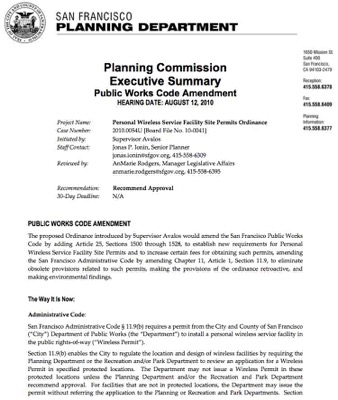
Readers may recall that cellular antenna design and the resulting local opposition has been a topic here for a long time. We also described how cellular mainstream member Ericsson tried to make a bold approach in antenna design that got interest in other countries, but none here. Cellular establishment members apparently prefer to hire lawyers and press for “shot clocks” and attempts at zoning preemption than to address their fundamental design problem: Their preferred antenna designs are incompatible with most suburban locations and the only alternative they have are very expensive custom designs they only want to use when in desperation. Your blogger’s approach to PCIA, the trade association representing most tower owners, was met with polite disinterest.
Universities seeking funding for novel design projects pairing EEs with architects to “think out of the box” on such design have come up with no funding from this multibillion dollar industry with perpetual antenna siting issues.
Since CTIA has already announced it will boycott SF over the cell phone labeling issue, they don’t have that threat in their quiver anymore. I suppose they can put their 4 law firms to work and sue over this issue also.
Maybe CTIA and its major members just prefer dealing with lawyers than with fundamental design problems. Cellular communications is not just part of our day to day lives, its infrastructure is part of the urban and suburban landscape. Should the industry try to come up with more pragmatic designs? Recall that at an FCC broadband hearing last year Jake MacLeod, a Bechtel VP, also stated that “we have reached the end of the line for current design concepts.” If this is what major contractors of the cellular establishment are saying then maybe the SF government is not so off the mark.
An antenna that “looks like it was designed by an engineer”


 (Does not include readers using RSS feeds.)


![[Valid RSS]](valid-rss-rogers.png "Validate my RSS feed")


