
Mobile operators to shift from "pure Wi-Fi" to unlicensed services tied to LTE, says report

[Reprinted with kind permission of PolicyTracker,
a London-based spectrum newsletter.]
The report, "Carrier Wi-Fi and LTE-U 2016," predicts a "decisive transition" from "pure Wi-Fi" to the tying of unlicensed services to LTE in various ways.
Mobile operators have historically invested in significant Wi-Fi networks, said analyst Kyung Mun in the report. Investment in unlicensed spectrum is likely to increase, but it will be redirected toward licensed assisted access (LAA), LTE Wi-Fi aggregation (LWA) and LTE WLAN radio level integration with IPsec tunnel (LWIP), he said.
Some of the new funding will be coupled to small cells, with multiple business models emerging as companies, carriers and over-the-top players look to capture end-users. "The competition for unlicensed spectrum use via Wi-Fi or LTE-U is a reflection of the competitive dynamics of the different types of operators," Mun said.
Around 80 per cent of mobile data is carried over Wi-Fi today, but that figure will rise to at least 90 per cent by 2020, said Mobile Experts analyst Joe Madden. Unlicensed data traffic tied to LTE control channels "will greatly improve on ease of use, and will be far more reliable than Wi-Fi services," he said. Operators will invest because hybrid combinations of LTE and unlicensed wireless can be as low-cost as Wi-Fi and as dependable as LTE.
"We believe many mobile operators are motivated to more effectively leverage the unlicensed spectrum via LWA/LWIP or LTE-U/LAA technologies, and the use will be driven by availability or handsets that can take advantage of these technologies as well as necessary infrastructure investment," Mun told us. Handsets that can take advantage of these features "will come to market in 2017 based on our supply check".
"Pure" unlicensed spectrum better?
The report asserts that most data being carried over unlicensed spectrum by 2020 will do so via a tie-in to LTE and sharing of licensed bands, said Simon Forge, director of consultancy SCF Associates. But the more likely scenarios "may be a preference for pure unlicensed spectrum, not anchored with a licensed band for aggregation," he told PolicyTracker.
That has more attractive business advantages for new entrants, and there are lots of protocols under consideration, such as MuLTEfire from Qualcomm with use of LTE packet protocols. "The interesting protocol area may be further developments in Wi-Fi with new open standards," Forge said.
But the key point is that there is pressure for the extension of unlicensed swathes of spectrum through the adoption of new licence-exempt bands, most usefully in the sub-1 GHz range. The question facing the "world's billions" is how soon that could happen: "Possibly not too soon but probably before 2030," Forge said.
Compatibility issues unresolved
The report appears to say that transition to aggregations of Wi-Fi and LTE-based unlicensed services is a "done deal," said SCF Associates senior consultant Robert Horvitz. "But the compatibility tests between Wi-Fi and the various LTE variants haven't even started," he told us. Nor has there been any discussion of the practical need for a licensed anchor to manage unlicensed bandwidth. "If there's really no technical need for that - and I believe that's the case - then it's just an excuse for cellcos to claim the right to bill users for free bandwidth," he said.
Mun said compatibility tests between Wi-Fi and LTE-U had been going on for some time with various constituents, and to varying degrees in lab and field tests. The Wi-Fi Alliance is working on a draft Wi-Fi/LTE-U coexistence test plan, an effort which has been delayed several times and which is now expected to be completed in September, he said.
Meanwhile, some mobile operators and vendors are carrying out field trials while they await regulatory approval, Mun said. For the mobile operators, with licensed spectrum, the licensed anchor "provides a reliable 'control mechanism' of sorts," he told us. By conducting all control signalling via the licensed anchor, they can manage quality of service better and can use the unlicensed spectrum as a supplemental downlink when needed.
What's really needed is "close cooperation between 3GPP, IEEE and regulators to develop a consensus on rules for hybrid band sharing and aggregation (fixed/mobile converged networks that combine licensed and licence exempt band use)," said Horvitz. And if not rules, he added, then there should at least be principles concerning technical and coexistence fairness issues.•
© PT Publishing 2016
Vic Hayes, Founding Chair of 802.11, Inducted into Consumer Electronics Hall of Fall for Wi-Fi Development
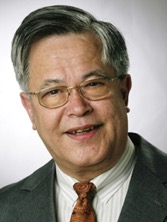
The CEA magazine i3 ("It is Innovation") published a long bio of Vic and discussion of his work that is here.
There is something really unlikely about the whole early history of Wi-Fi. Vic worked for NCR, the company once called National Cash Register because that was their main product. Except for a brief foray into PC production, NCR was never in the consumer products business and was a classic B2B firm. (It is interesting that today's NCR has no interest in discussing its role in Wi-Fi and even blocked placing a plaque commemorating Wi-Fi development in one of its buildings in Holland!)
But an interest in the 1980s to sell PC-based cash registers in department stores that could be interfaced to store main frame computers focused NCR's attention on networking. Wired Ethernet was not a practical solution in such stores due to cement floors and frequent rearrangements of counters. Thus in 1987 a search began for a wireless alternative. The group involved, located in NCR's Utrecht Holland lab quickly noticed the possibility of the May 1985 FCC spread spectrum/ISM band decision as a home for such networking.
Vic was then the founding chair of the IEEE 802.11 committee that started with a handful of members and went on to develop the ubiquitous 802.11 standards that we expect everywhere we go. Vic coauthored a book on how this all came about and I strong recommend it.
Congratulations to Vic on this well deserved honor!
Beginning of Wi-Fi Privacy-Related Electronic Warfare
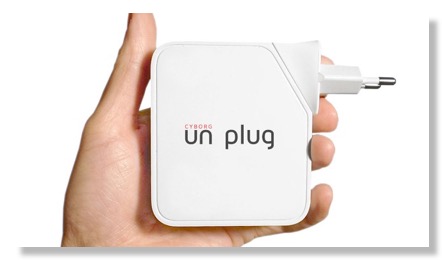
In a previous post we wrote about the jamming threat to Wi-Fi and cellular that may come from unrestricted access by private drones to their spectrum. Today, a CNN post provocatively entitled “This gadget can knock drones and Google Glass offline” describes a device called the “Cyborg Unplug”. Its maker describes it as
Cyborg Unplug is a wireless anti-surveillance system for the home and workplace. 'Plug to Unplug', it detects and kicks devices known to pose a risk to personal privacy from your local wireless network, breaking uploads and streams. Detected devices currently include: Google Glass, Dropcam, small drones/copters, wireless 'spy' microphones and various other network-dependent surveillance devices.
Cyborg Unplug comes hot on the heels of glasshole.sh, a script written by Julian Oliver to detect and disconnect Google's Glass device from a locally owned and administered network. Following broad coverage in the press, the script struck a chord with countless people all over the world that felt either frustrated or threatened by the growing use and abuse of covert, camera-enabled computer technology.
Whether business office, restaurant, school or nightclub: it's your territory and your rules, so make it harder for those that seek to abuse it.
The maker describes the 2 modes of the device:
Cyborg Unplug can be operated in two modes. The recommended mode is Territory Mode, disconnecting target devices from selected network(s) owned and operated by the user. The other mode is All Out Mode, which disconnects all detected target devices from any network they are associated with, including paired connections with smartphones. Please note that this latter mode may not be legal within your jurisdiction. We take no responsibility for the trouble you get yourself into if you choose to deploy your Cyborg Unplug in this mode.
We will not parse here US rules and regulations about whether this is illegal. Nor will we speculate on whether it will actually work as advertised. This new product and its website and PR campaign shows the pent up demand for privacy protecting devices. If this device becomes popular, explicitly illegal Wi-Fi jammer manufacturers probably will go after the same market and a whole cycle of electronic warfare will begin.
The Wi-Fi industry and cellular industry should do some soul searching about whether their nonchalant attitude towards privacy invading uses of their technology contributes to supply and demand issues for jammer-like devices. Your blogger was once involved in electronic warfare issues decades ago. He does not want these to come to the dynamic civil communications systems that contribute so much to our society and economy.
Once Pandora’s Box is fully open, large NALs to mysterious Chinese companies will really have no impact.
Leaders of the Wi-Fi and cellular industries: Are there actions your industries are taking or trends which you are ignoring that are stimulating the demand for jammers? Will addressing these issue within your industries be more effective than relying on the currently underfunded FCC to solve severe problems that are likely beyond its resources if they take hold?
Field of Dreams & Spectrum Policy
This week, the 80th anniversary of the Communications Act of 1934, is also the 25th anniversary of “Field of Dreams”, the movie most remembered for the line “If you build it … they will come”. While I recall that President Bush (41) publicly said he was confused about the movie, President Bush (43) actually was a great fan.
The connection to spectrum policy? Classic FCC spectrum policy (along with spectrum policy in other places) was prescriptive - that is users could do A and B, but not C if C was not explicitly allowed. Thus when I joined FCC in 1979, land mobile (Part 90) users were allowed AM and FM modulation and it took a long series of rule makings, some of which inconsistent in their final technical details details, to allow digital modulation for all users. By contrast, today’s rules are generally (broadcasting and public safety being major exceptions) proscriptive in that they tell you what you may not do - generally things that would result in interference to other users.
So as we near the 1 year anniversary of the IEEE-USA petition for FCC on the spectrum above 95 GHz that now lacks any rules (and is hence implicitly forbidden for normal licensed or unlicensed use) today let us ponder what we gain by having no such rules or even a defined path to such rules. In the Docket 81-413 rulemaking most commenters were opposed saying the technology under discussion was “blue sky” and had no demand. Yet within 2 years commercial products were available. A few years later came Wi-Fi and Bluetooth -- now “applications that have changed our world”.
Let us ponder of the lessons of “If you build it … they will come” and also the spectrum policy variant: “If you allow it .. they may well build it”. Let’s see if we can convert most FCC spectrum rules from prescriptive to proscriptive structure. (The cellular rules generally have this approach already.)
ABC US News | ABC Celebrity News
Mac@30
Today is the 30th anniversary of the introduction of the Apple Macintosh. It may not come as surprise to many readers of this blog that your blogger has been a Mac user from the very beginning. We decided to buy a Mac when they first came out 30 years ago, but could not actually get one until March 17. That day was St. Patrick’s Day as well as the start of Purim in the evening. To see if the new computer and printer were as easy to use as they promised, we set them up and tried to design and print place cards for people who were coming to dinner at our house that night. For the unusual confluence of holidays we designed the cards with each person’s name and a shamrock and a 3-cornered hat (associated with the evil Haman in the Book of Esther). Amazingly we finished the set up, design, and printing in about an hour and proceeded with the rest of the dinner preparation - the original Mac was that easy!
In the Vic Hayes presentation in previous post and the 2011 Steve Jobs memorial post we document how Apple played a key role in making Wi-Fi a ubiquitous service, more than the radio LAN for cash registers that was an original goal. Thus the Apple design philosophy of easily approachable technology also has had a key impact on the wireless industry - resulting in the cellular industry’s love/hate relationship with unlicensed spectrum and their codependency with it.
Below is a link to NPR’s excellent discussion today of the anniversary and interviews with members of the original team.
Vic Hayes, Founding Chair of 802.11, Receives "Lovie" Lifetime Acievement Award

The Lovie awards, named after Ada Lovelace, the legendary first software writer, are not well known in the US. They “recognise the unique and resonant nature of the European internet community – from Europe’s top web and creative networks and content publishers to cultural and political organisations and bedroom bloggers.” The citation for Vic says
His work helped to usher in the age of the ubiquitous Internet, providing users with Ethernet-free connections and a brand new sense of connected mobility. That freedom led to countless innovations in hardware and software that have set the standard for the modern Internet age.
Congratulations to Vic on this wonderful recognition! I was honored that he chose this occasion to mention my role also in his discussion of the origins of Wi-Fi. See the video below at 2:30
Google's Balloon-based Wi-Fi for Rural Areas & Emergencies

In the past few days Google’s Project Loon has been revealed. As one who was a early pioneer in this area, your blogger was excited about this unexpected use of Wi-Fi which in itself was an unexpected application of the unlicensed ISM bands when the rules for them were adopted in 1985.
While much is made now about the ability of unlicensed spectrum to foster innovation, the key to the success of the ISM bands and the comparative failure of the contemporary U-NII and U-PCS bands is the great technical flexibility the rules for the ISM bands had to implement unimagined applications, not just what the proponents of the bands wanted at that time. Unlicensed by itself does not lead to technical innovation. The synergy of unlicensed and flexible technical rules that allow innovators to innovate at Internet speed” not “government speed” is what enables innovation. Several of the recent proposals for new unlicensed spectrum have so many strings attached that one wonders if they will really enable innovation as the ISM bands have.
Kudos to Google for this fascinating innovation of balloon-based Wi-Fi for emergency and rural use. It shows that the combination of unlicensed and truly flexible rules can supply the spectrum needed for disruptive innovation - perhaps the reason why the mainstream spectrum holders and their suppliers in the 1980s were dead set against the original ISM band rules and were happy to see your blogger sent off to “internal exile” in FCC for several years after the original ISM band decision.
Steve Jobs 1955-2011:
His Personal Role in the First Consumer Marketing of the Now Ubiquitous Wi-Fi
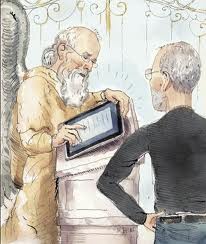
[Text of 2005 Stanford Commencement Address]
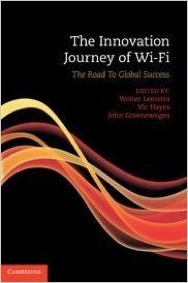
The impact of the iPhone on the wireless industry is well known. The role of Steve Jobs and Apple in the mass introduction of Wi-Fi is less well known. Here is a quote by Cees Links, of NCR’s Utrecht laboratory that pioneered Wi-Fi technology, from the book The Innovation Journey of Wi-Fi: The Road to Global Success:
The meeting in the Apple Boardroom was an interesting one. Lucent brought some of the most Senior Managers to the meeting, including John Dickson, the Head of the Semiconductor Division, as had Apple. Cordialities were exchanged, business cards handed out, etc. The meeting started at 2:00 PM, the companies at either side of the table, Lucent representatives with suits and ties, the Apple delegation was showing up Californian style. But, no Steve Jobs, the atmosphere became somewhat awkward: Steve had been delayed. Then Steve walks in, Californian style too, walks over to the Lucent side and shakes hands with everyone, needing no introduction. Steve starts talking, wireless LANs are the greatest thing on earth, this is what Apple wants, for about ten minutes straight. I believe Rich tried a few comments, no traction.
Then Steve asks: “Are there any questions?” I tried to show a few slides: key wins, market positioning, product offering, value creation, etc. Presenting slides with Steve Jobs is actually quite easy: you put up the slide, and he will do the talking, not necessarily related to the slide. Then he asks for the next slide. Rich McGinn is chiming in a few words, he thinks 1999 will be the big year for DSL: “Will Apple be ready?” That is: “Will Apple PCs have DSL?” Steve Jobs: “Probably not next year, maybe the year after, depends on whether there is one standard worldwide...” Turning the conversation back to wireless LANs: “We need the radio card for $50, and I want to sell at $99.” Then Steve apologizes, he has to leave – stands up, says “Hi!” and goes. The room falls silent.”
Vic Hayes recently pointed out to me that this price was one third of the 1999 market price whereas the data transfer rate was 5 times higher.
UPDATE
Cees Links expanded on this account in a recent blog post for EE Times. Here’s a part:
.That electrifying meeting was the start of a successful joint Apple/Lucent effort that resulted in the launch of the Apple i-Book with wireless LAN and the Airport base station. The key challenges were redesign, integration and working with all suppliers to drive down the cost. Amazingly, in about 6 months time the goal was within reach. It was just a clear example of what a clear vision, the promise of high volumes and purchasing power can do.
More to the vision of Steve Jobs: the launch in 1999 perfectly coincided with the rise of the Internet and the need of people to have Internet access at home, as well as being able to connect multiple PCs in different locations in the home. Within weeks of Apple’s rollout of the new WLAN technology, we received calls for product integration from IBM, Sony, Compaq, HP, Dell, etc.
Because of Steve Job’s vision, today Wi-Fi is a standard feature of every laptop, and of many other devices worldwide
Thanks to Vic Hayes for pointing me to the EE Times post..
Alfred E. Kahn, R.I.P.:
A Very Early Wi-Fi Pioneer
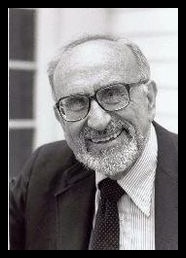
No. Prof. Kahn was the impetus behind Executive Order 12044, “Improving Government Regulations” , which is the real beginning of Wi-Fi and several other contemporary wireless technologies.
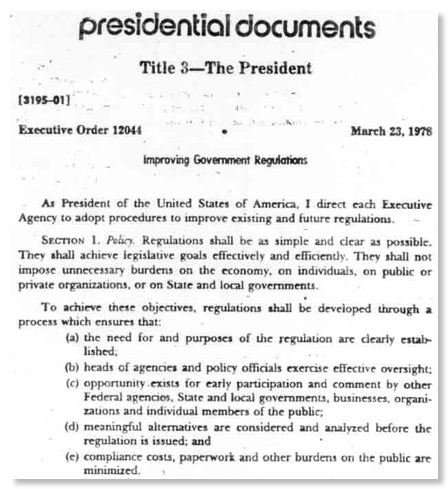
Section 4 of the EO had the following requirement:
Review of Existing Regulations.
Agencies shall periodically review their existing regulations to determine whether they are achieving the policy goals of this Order. This review will follow the same procedural steps outlined for the development of new regulations.
In selecting regulations to be reviewed, agencies shall consider such criteria as:
(a) the continued need for the regulation;
(b) the type and number of complaints or suggestions received;
(c) the burdens imposed on those directly or indirectly affected by the regulations;
(d) the need to simplify or clarify language;
(e) the need to eliminate overlapping and duplicative regulations; and
(f) the length of time since the regulation has been evaluated or the degree to which technology, economic conditions or other factors have changed in the area affected by the regulation.
While strictly speaking this did not apply to FCC as an independent agency, FCC Chmn. Ferris undertook to follow these steps.
As my former boss, Steve Lukasik, has written this review started FCC down the path of noting that the ongoing implicit prohibition of spread spectrum technology was anachronistic and then changing it. Subsequent actions cleared the way for Wi-Fi, Bluetooth, and CDMA cellular.
So while Prof. Kahn never made it over to FCC, the snowball he started rolling with EO 12044 had a huge impact on wireless technology and the way we live today.
IEEE 802.11 @ 20

We have mentioned previously that this is the 25th anniversary year of the Docket 81-413 Report and Order that created the 3 unlicensed ISM bands that are the home of Wi-Fi and a myriad of other unlicensed products. It is also the 20th anniversary of IEEE 802.11, the standards group that created the specification for the ubiquitous Wi-Fi products.
802.11 is meeting in Hawaii this week to continue their handiwork in new and exciting areas and are having a modest celebration of the anniversary. The above Facebook page has anniversary messages from the past and present leaders of the group and they were gracious enough to invite your blogger to contribute also.
So congratulations 802.11 for your success that went beyond anyone’s imagination two decades ago when you began. It certainly is way beyond anything we imagined at FCC when we started down this path in 1979.
UPDATE
Some links on the IEEE 802.11 anniversary meeting:
September 2010, 802.11 20th Anniversary Celebration Photographs
Press release with milestones
“Happy 20th Birthday To The IEEE 802.11 WLAN Working Group” from Electronic Design
Wi-Fi Takes the Rails

This morning Amtrak launched its Wi-Fi Internet service, known as AmtrakConnectSM aboard all 20 high-speed Acela Express trains, in six major stations along the Northeast Corridor, and in all four Club Acela lounges. Initially offered as a complimentary service, AmtrakConnect is available to every passenger on board Acela Express both in Business and First class seating.
“AmtrakConnect delivers the fast, reliable and consistent connectivity that our customers have been asking for,” said Matt Hardison, Chief, Sales Distribution and Customer Service, noting the on-board Wi-Fi system typically outperforms cellular air cards and smart phones.
Using any laptop computer or other portable device that is Wi-Fi enabled, Amtrak passengers traveling on Acela Express between Washington, D.C. and Boston can connect to the service for general Web surfing and reading email. The system also allows passengers to access their corporate networks through most standard Virtual Private Network (VPN) solutions, turning the train trip into productive work time.In addition, Amtrak is launching AmtrakConnect for all Amtrak passengers within the gate areas of Washington Union Station, Baltimore Penn Station, Philadelphia 30th Street Station, New York Penn Station, Providence Station and Route 128 Station in Boston. Wilmington Station will be Wi-Fi equipped once major station renovations are completed in early 2011. Wi- Fi service continues to be available in all ClubAcela lounges in Washington, DC, Philadelphia, New York, and Boston.
“This is only the first step for our AmtrakConnect program,” says Lenetta McCampbell, Senior Director for On-board Systems. “Amtrak will continually improve the service as Wi-Fitechnology evolves, and we are evaluating opportunities to expand AmtrakConnect to additional routes and stations throughout the country.” AmtrakConnect service on Acela Express trains will remain free of charge during theintroductory period, after which the policy will be reviewed based on customer demand and system performance.
AmtrakConnect was deployed on Acela Express by Virginia Beach-based GBS Group and its partner Nomad Digital.
Free Wi-Fi at Airports
 DiscoveryNews has an interesting article on the growing trend of free Wi-Fi at airports for this 25th anniversary. It starts off with “
The article then asks, “So why are some big airports switching to the free Wi-Fi model, while others continue to charge a fee?” It turns out the reason is COMPETITION. Airports can attract more travelers with free Wi-Fi.
Here’s a site with info on Wi-Fi availability at airports.The rest of the story ...
Origins of Wi-Fi and Bluetooth
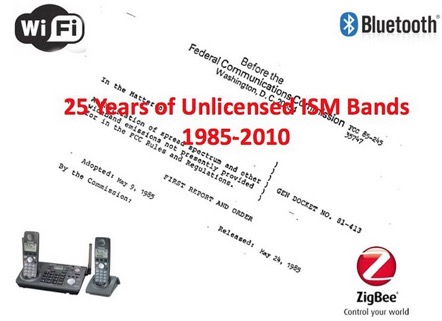
May 9, 2010 will be the 25th anniversary of the FCC's adoption of the First Report and Order in Docket 81-413 - the rules that laid our the rules that became Wi-Fi, Bluetooth, Zigbee, many of the cordless phones sold in the US, and a variety of niche products that enhance our lives. In the next few months we will have several posts on how this all came about and its impact on today's world.
A Dutch team based at

TU Delft/Delft University of Technology has completed a book on the background of this decision and the early history of Wi-Fi focusing on the factors that stimulated innovation. (NCR's Utrecht Engineering Centre played a key role in early 802.11 standards formulation and its Vic Hayes, a coauthor of the book, was the founding chair of the group.) The book should be published later this year by Cambridge University Press.
The 2008 George Mason University "Unleashing Unlicensed" conference also has a great deal of information on why this decision came about. The paper presented by Vic Hayes and Wolter Lemstra from TU Delft is a good preview of the coming book.
A shorter history, "A brief history of Wi-Fi" was published in The Economist in 2004.
Some people think this decision was the just FCC reacting in a dilatory way to a petition from industry - adding no value and just slowing down progress through mindless regulation of technology. It wasn't. While the then Hewlett-Packard initially supported it, all other significant corporate interests at the time were against it. (The part of H-P that was involved then is now part of Agilent, not the present H-P. It was supportive and then just lost interest in the topic with a corporate refocusing.)
The FCC initiative that resulted in these rules were an internal FCC initiative that came out of Carter Administration and then Reagan Administration belief that deregulation would stimulate economic growth.
In occasional posts over the next few months we will review where this decision came from and lessons it offers for the present day.
"Looking back, it is clear that adoption of these rules was one
of the significant achievements of the Reagan FCC
- though I doubt if anyone thought so at the time."
Mark Fowler, FCC Chairman 1981-87, 4/08
Will Free Wi-Fi Become the Norm?

Larry Magid of CBS News and the San Jose Mercury News had an interesting post on CBS News this week about the future role of Wi-Fi. Of course, if would be a nice holiday present to all if it widely became free in public places. It was stimulated in part by McDonald's announcement of free Wi-Fi starting in January.
I also note that AT&T Mobility CEO Ralph de la Vega has said that it will try to ease the load on its network overburdened by the success of iPhone, and perhaps somewhat underbuilt/underprovisioned, and to offload the carrier's cellular traffic to Wi-Fi hotspots and femtocells.
So as we approach the 25th anniversary next year of the Docket 81-413 rulemaking that brought forth Wi-Fi (and Bluetooth) over the opposition of most mainstream players at the time, who knows how big its long term role may be?
UPDATE
Wired: Ford is making its cars into mobile Wi-Fi hot spots.


 (Does not include readers using RSS feeds.)


![[Valid RSS]](valid-rss-rogers.png "Validate my RSS feed")


