
#IdeasForRandall
Or you can email all great ideas to me! I’ll take them on Twitter too! Just tag me with your idea & #IdeasForRandall http://t.co/uXenMnBfdv
— John Legere (@JohnLegere) October 13, 2015In the above tweet, T-Mo, "the Un-carrier" asks for comments on what is wrong with the industry. Perhaps we should all tell him that while the cellular industry has made many great contributions to US economic growth and US society, it has persistent blind spots with several unintended consequences of their actions and business plans.
In response to a Tuesday morning report from the LA Times that an AT&T customer’s service improvement suggestions were met with a letter from the carrier’s lawyers, T-Mobile is encouraging customers from any wireless carrier to share their thoughts with the Un-carrier.
As of today, T-Mobile said wireless subscribers across the board are welcome to send their ideas for improving the industry to IdeasforRandall@t-mobile.com or share them with CEO John Legere on Twitter using the tag #IdeasforRandall. In its typical provocative style, T-Mobile said it will take action on the best ideas before forwarding them on to AT&T CEO Randall Stephenson and AT&T’s lawyers.
According to Legere, AT&T’s harsh response to Alfred Valrie, the longtime customer cited in the LA Times article, proves that AT&T and its CEO “don’t care about what customers want. AT ALL.” According to the LA Times report, Valrie received a warning letter from AT&T's lawyers after he emailed Stephenson suggesting the carrier offer "unlimited data for DSL users and 1,000 text messages for $10 a month."
“The entire Un-carrier revolution began by listening to customers,” Legere said in a Tuesday press release. “It’s where we get our best ideas, and I want everyone to keep sending them my way at John.Legere@T-Mobile.com. It absolutely amazes me that Randall would tell a lifelong customer to basically go away and talk to my lawyers. I interact with customers on a daily basis so I can hear their ideas firsthand. It’s called living in the 21st century.”
So, Mr. Legere, here are some ideas for your company and the industry to think about:
- The list of 7 New Year's resolutions I first posted in December 2011. These deal with: Wireless technology innovation, Social harmony and cell phone use,Cell phones use in vehicles, RF safety, Base stations and their environments, “Spectrum scoring” or “How to count to 500”, Provide communications for niche applications that otherwise contend for spectrum with CMRS, & Unrestrained use of anonymous prepaid cell phones. I don't see any progress or even industry interest in any of these topics.
- The lack of US cellular industry interest in 5G above 24 GHz. T-Mo filed comments in Docket 14-177 that were pretty useless and then didn't even file reply comments. How many of the 176 questions in the NOI did T-Mo address in their comments? CTIA & VZW filed also filed comments but no replies. Sprint didn't bother to file either! T-Mo's German parent takes R&D money from the German Government, a major stockholder, for millimeter wave 5G development. Is that related to T-Mo USA's disinterest in FCC policy developments in this technology?
- Why are T-Mo and the major carriers so disinterested in actually suppressing the use of contraband cell phones in prison? These phones have been used to run criminal enterprises as well as to order murders of witnesses. All the carriers seem focused on drawing a "bright line" on making ALL cellular jamming illegal through a twisted interpretation of 47 U.S.C. 333 and directing underfunded prison administrations on only "managed access" as a magical silver bullet when in some locations it really has the same problems. Many maximum security prisons are located in truly remote areas where the most cost-effective solution is carefully designed jamming with strict FCC rules on "over coverage". Cellular carriers have a bad state of denial on over coverage in managed access systems!
- Cellular carriers have been amazingly silent on spectrum policy issues of smartphone use in drones. Do you really want drones to use cellular spectrum for video downlinks? Ask your techies what happens when several drones fly at 1000' in an area where base stations were planned for users below 50'.
- Do T-Mo and other carriers actually support law and order in spectrum enforcement? When FCC decided to decimate its spectrum enforcement staff, the usually powerful CTIA and its members were very ineffective — only extracting a vague promise they would get attention. How much attention will you get from the remaining 44 demoralized agents spread across 50 states and Puerto Rico, especially if they don't get money for training, overtime, and travel to deal with complaints?
- Should cellular carriers support a more rational FCC budget appropriation for noncontroversial spectrum issues such as new technology and enforcement or just continue to demand a lion's share of the remaining resources and hope for the best?
- While I understand why T-Mo and other carriers charge large roaming fees in many cases if you use a US cell phone overseas without making arrangements for a special plan, I do not understand why if you call an overseas number from a cell phone operating in FCC jurisdiction you are charged a per minute rate that approximates the former AT&T's 1970s tariffs of several dollars a minute when the fair market value of an international call today is less than $0.10/minute. Don't such extremely high charges violate Section 201(b) of the Communication Act and are a sign of market failure?
Mr. Legere, next time you are passing through the DC area, I would be glad to meet with you to discuss these issues. Your DC staff knows how to find me.
UPDATE
Sprint Drive First: Kudos to Sprint for New Safety App
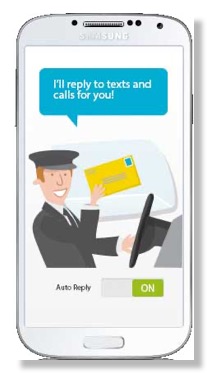
.Shortly after the car exceeds 10 mph – determined using GPS and cell tower triangulation – the mobile phone will be locked. If the driver is using the phone when Sprint Drive First engages, the call will end and the phone lock screen will appear. Anyone texting the driver will receive an automated message indicating the person they texted is driving. The message is customizable by the account holder.
A locked device displays a home screen with exit and emergency 911 buttons to override the app. Sprint Drive First can be overridden if the user is a passenger in a car, on a bus or train, but the parent or account holder can choose to receive notifications when the service is overridden.
Parents have a choice of programming up to five phone numbers to ring through when the phone is locked as well as allowing functionality of three apps, such as navigation, music or weather.
When the application no longer detects movement it unlocks and full device functionality resumes. Sprint Drive First takes into account stop-and-go traffic, so the driver needs to be sitting idle for a few minutes before it will unlock
Cell Industry Finally Acts on Smartphone Theft Prevention
Each device manufacturer and operating system signatory of Part I of this "Smartphone Anti-Theft Voluntary Commitment" agrees that new models of smartphones first manufactured after July 2015 for retail sale in the United States will offer, at no cost to consumers, a baseline anti-theft tool that is preloaded or downloadable on wireless smartphones that provides the connected capability to:
- Remote wipe the authorized user's data (i.e., erase personal info that is added after purchase such as contacts, photos, emails, etc.) that is on the smartphone in the event it is lost or stolen.
- Render the smartphone inoperable to an unauthorized user (e.g., locking the smartphone so it cannot be used without a password or PIN), except in accordance with FCC rules for 911 emergency communications, and if available, emergency numbers programmed by the authorized user (e.g., "phone home").
- Prevent reactivation without authorized user's permission (including unauthorized factory reset attempts) to the extent technologically feasible (e.g., locking the smartphone as in 2 above).
- Reverse the inoperability if the smartphone is recovered by the authorized user and restore user data on the smartphone to the extent feasible (e.g., restored from the cloud).
In addition to this baseline anti-theft tool, consumers may use other technological solutions, if available for their smartphones.
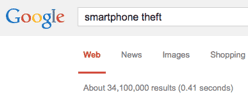
CNET reported that New York Attorney General Eric Schneiderman and San Francisco District Attorney George Gascon have concerns about the new CTIA announcement:
"While CTIA's decision to respond to our call for action by announcing a new voluntary commitment to make theft-deterrent features available on smartphones is a welcome step forward, it falls short of what is needed to effectively end the epidemic of smartphone theft. We strongly urge CTIA and its members to make their antitheft features enabled by default on all devices, rather than relying on consumers to opt-in."
(Note to CTIA: CNET is owned by CBS so you might want to boycott them because they agree with San Francisco on this issue.)
But this announce is a good step forward to improving the safety of smartphone users. Even if not all users opt-in, “herd immunity” would apply if the vast majority of users activate the feature. However since there are indications the the electronic serial numbers of many cell phone models are presently changeable as an “undocumented feature”, this will only apply if the new system is robust in the face of tinkering by overseas nerds who stand to make >$100/stolen phone if they can reactivate the phone for sale in their country.
State AGs to cellphone makers: Install technology to curb thefts
Visit NBCNews.com for breaking news, world news, and news about the economy
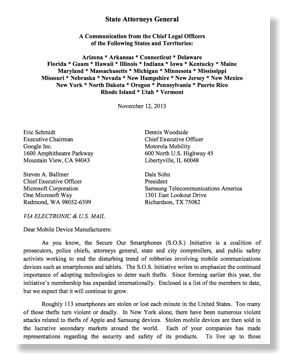
The 29 states and two territories signing the A.G.'s letter are Arizona, Arkansas, Connecticut, Delaware, Florida, Guam, Hawaii, Illinois, Indiana, Iowa, Kentucky, Maine, Maryland, Massachusetts, Michigan, Minnesota, Mississippi, Missouri, Nebraska, Nevada, New Hampshire, New Mexico, New Jersey, New York, North Dakota, Oregon, Pennsylvania, Puerto Rico, Rhode Island, Utah, and Vermont.
Microsoft has already said:
“Windows Phone has built in capabilities enabling users to find, lock and even remotely delete data from a lost or stolen phone. We agree this is an industry-wide issue and are working closely with the CTIA and other organizations to address.”
Rossen gave Apple good grades for a feature built in to their latest operating system to “brick” phones although he complained it was somewhat hard to find.
CTIA does have information on links to suppliers of antitheft software. Their main page of information on the topic, Before It's Gone: Steps to Deter Smartphone Thefts & Protect Personal Info, has the statement “CTIA and its members remind you that your personal safety, not your smartphone, should always be your number one priority.” However CTIA carefully avoids the issue of violent smartphone thefts that seem to have motivated the AGs action and appears to focus on protecting the information on the smartphones through remote wiping. The issue of “bricking” phone to make theft unattractive and hence decrease violence.
This is typical of a cellphone industry trend to minimize the unintended consequences of their products, be they
- RF safety concerns or
- use of cell phones in prisons or
- anonymous cellphone use by criminals
- or the “uglification” of communities with cell towers that were designed with no attention to their environment
Video from CTIA website - Note being mugged is not given as one of the “stages of losing a cellphone” and the woman that lost the phone does not appear to have any injuries - unfortunately not always the case!
Other coverage:
NY Daily News
Mass AG
Village Voice
UPDATE
On December 30, 2013 FCC Commissioner Pai tweeted:
A gun-toting mugger in Central Park was so disappointed by his victim’s cheap flip phone that he handed it back." http://nypost.com/2013/12/29/central-park-mugger-rejects-flip-phone/ …
This is one of the realities that the cellular industry is trying to ignore: If you make use of smartphones in urban areas dangerous because they are too valuable to thieves since they can’t be “bricked” readily, urban users may go back to “flip phones” and “feature phones” and avoid the highly profitable but possibly dangerous smart phones.
Thus bricking phones quickly and effectively is really in everybody’s interest!
NBC's Today on Stolen Smart Phones - Again
Visit NBCNews.com for breaking news, world news, and news about the economy
As the cellular industry starts the 3rd and last day of CTIA 2013™ in Las Vegas accompanied by all 3 remaining FCC commissioners - who came despite the sequester although no other FCC staff came, the NBC Today show risked joining the City and County of San Francisco on the CTIA boycott list. In the segment shown above, for the second time in a little over 2 months a Today segment by Jeff Rossen highlighted violent thefts of smart phones.
This is another unintended consequence of today’s ubiquitous cell phone use. All new technologies have unintended consequences. While the cell phone industry strives to make positive contributions to our society, economy, and environment it consistently turns a near blind eye to such unintended consequences preferring “solutions” that have little or no impact on industry operations regardless of whether they actually impact the problem at hand. While I can understand a little this tendency of industry, I really don’t understand why FCC tolerates it consistently. Perhaps the new leadership will take a new look?
One real problem that prevents reliable “bricking” of stolen phones is the fact that the IMEI or “serial number” can be changed in many models. As was discussed here earlier, some privacy advocates may favor this, but consumers are ignorant of this design detail that may threaten their life. Making all smart phones reliably “brickable” would enhance public safety. Why doesn’t the cellular industry insist to its suppliers that it be done? If some people really want phones with changeable serial numbers, they should be clearly labeled as such if allowed on the market.
Below is a YouTube “film festival” of violent cell phone thefts so you can see what we are talking about. If you need more, YouTube has plenty!
(This one below is from Brussels, not US)
4 Major Cellular Carriers Unite to Deter Texting While Driving
FierceWireless announced today “AT&T recruits Verizon, Sprint and T-Mobile to curb texting while driving”. AT&T started the It Can Wait website in 2012 to deter texting and driving, especially by teenagers. Sprint, T-Mo, and VZW have now joined the capping which will kick off in full on May 20. (Sprint had previously cooperated since 2010 with Oprah’s No Phone Zone website on discouraging texting use while driving.)
In addition, FierceWireless reports:
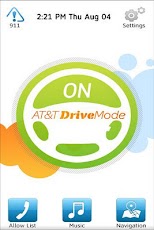
In conjunction with It Can Wait, smartphone manufacturers Pantech, HTC and Samsung will preload the AT&T DriveMode safety app on Android devices sold to AT&T subscribers. DriveMode automatically replies to incoming texts, notifying the sender that the message recipient is driving and unable to respond. The app automatically turns on when the user is in a vehicle moving at speeds in excess of 25 miles per hour, and it automatically shuts off once the vehicle falls to speeds below 25 miles per hour for five minutes.
Our congratulations to the 4 major carriers for joining together now in this valuable effort.
NTSB Chair Hersman

Note that this last sentence is simplified on the above industry website to just “No text is worth the risk”. The CTIA website says “The wireless industry defers to consumers and what they choose to support on driving legislation, whether that’s hands-free regulations or bans on talking on their mobile devices while driving.” Thus there still is a major gap between NTSB and the wireless industry, but the recent move is a positive step forward."According to NHTSA, more than 3,000 people lost their lives last year in distraction-related accidents. It is time for all of us to stand up for safety by turning off electronic devices when driving.
No call, no text, no update, is worth a human life.”
NY Times: "Cellphone Thefts Grow, but the Industry Looks the Other Way"

The cellular industry does may things very well. It provides high speed reliable service in many parts of our country. It provides amber alert service to help protect children. It helps those suffering from spousal abuse get cell phones for their protection. But the industry also turns a blind eye to the societal problems that are the unintentional consequences of its service. Last year’s New Year’s Resolution post compiled several of these issues. None have shown noticeable improvement.
As in many things, problems not attended to often get worse. The item at the top is an article from the front page of the May 2 New York Times with the title “Cellphone Thefts Grow, but the Industry Looks the Other Way”. One wonders if CTIA and its members will now boycott advertising in theTimes as they have boycotted San Francisco?
The article starts:
When a teenage boy snatched the iPhone out of Rose Cha’s hand at a bus stop in the Bronx in March, she reported the theft to her carrier and to the police — just as she had done two other times when she was the victim of cellphone theft. Again, the police said they could not help her.
Commenting on a record 1,829 cellphones were taken in robberies last year in Washington DC, Police Chief Cathy L. Lanier was quoted as saying, “The carriers are not innocent in this whole game. They are making profit off this.” We guess she was not very moved by CTIA’s John Walls, Vice President, Public Affairs who made this YouTube video last year to show how concerned the industry was about this issue after CTIA felt the Today Show misrepresented their position:
March 2012 Today Show segment on cell phone thefts:
Visit NBCNews.com for breaking news, world news, and news about the economy
CTIA response to Today segment the same day:
While CTIA statements on cellphone theft usually focus on protecting private information on the phone, the large number of thefts raises concerns about violence and contribution to growing crime rates. According to the Times,
In San Francisco last year, nearly half of all robberies involved a cellphone, up from 36 percent the year before; in Washington, cellphones were taken in 42 percent of robberies, a record. In New York, theft of iPhones and iPads last year accounted for 14 percent of all crimes.
Some compare the epidemic of phone theft to car theft, which was a rampant problem more than a decade ago until auto manufacturers improved antitheft technology.
The Times article point out that one complexity that limits owner from making stolen phones nonfunctional by remote controls that the International Mobile Station Equipment Identity of many phones can be hacked, making the stolen phone impossible to identify. On this issue, the cell phone industry is not the only party at fault. Some privacy advocates view this ability to change identity as a good thing. The article states:
Some industry experts say consumers should have the right to modify their phones’ identification features to avoid being tracked.
The right to change the identification is a “pro-privacy measure,” said Seth Schoen, a senior staff technologist at the Electronic Frontier Foundation, a technology-oriented civil liberties group in San Francisco.
While your blogger often agrees with EFF on issues, in this case they have oversimplified the problem. Freedom from being mugged for your smart phone is as important as freedom of your children to go to school without fear of a gunman killing their classmates.
If some people want to change their IMSEIs from time to time for privacy reasons, no doubt a niche market, perhaps such phone should be available and clearly identified as such. Buyers more concerned about muggings - we suspect a much greater portion of the market - could then buy phones with permanent IMSEIs just as we regularly buy cars with permanent VINs. (It would probably be convenient for some to have cars where you can change the license plates by remote control as in James Bond movies but I am not aware of any jurisdiction that allows that.)
In any case, it looks like FCC will have to make a policy decision whether some or all IMSEIs should be permanent as intended. The industry may not be interested in such a proceeding at FCC, but the public safety demands that all options be considered in an open and transparent process.
Observations on Cell Phone Carrier Policies Overseas
Having recently rented a cellphone in Japan and bought GSM SIM cards in France and UK for my cheap unblocked cellphone reserved for overseas use, one thing all 3 transactions had in common: personal identification was required.
The US is the outlier in the industrialized countries in allowing purchase and use of cellphones in general without any identification, a topic of recurring discussion here. While there are major societal reasons against imposing a strict identification requirement on all cellphone sales in the US at the moment, the unrestricted sale of bagfuls of prepaid cellphones at Walmart and other large retailers should raise some real questions. Anonymous prepaid cellphones are widely used in criminal acts as the communications media of choice and are feeding the contraband prison cellphone use problem.
While I sincerely hope that the US never has a cellphone-activated IED terrorist incident, the unrestricted availability of anonymous cellphones is a real risk factor.
We have previously written about the Japanese “manner mode”, an easy consistent way to silence all cell phones in Japan - by comparison there is no consistent way to silence all US market cell phones and the root cause of the Marimba/Mahler incident was that the user thought he had silenced the phone but had not realized that silencing all alarm modes was an extra step.
While discussing “manner mode” with a Japanese friend, he mentioned that Japanese cell phones also have “drive mode”. Curious, I Googled for an English manual for a Japanese cell phone and found one from KDDI, a major Japanese cellular carrier:
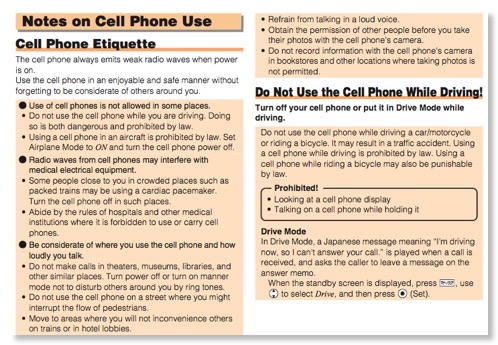
Note the following points that you would never hear from a US carrier:
- Do not use the cell phone while driving
- Be considerate of where you use the cell phone and how loudly you talk.
- Do not make calls in theaters, museums, libraries, and other similar places. Turn off power or turn on manner mode not to disturb others around you by ring tones.
- Do not use the cell phone on a street where you might interrupt the flow of pedestrians.
- Move to area where you will not inconvenience others on trains or in hotel lobbies.
- Refrain from talking in a loud voice.
- Turn off your cell phone or put it in Drive Mode while driving,
While not all readers would agree with all the suggestions in the KDDI manual, I hope many will agree that the US cell phone industry should try some of these ideas to reduce the social friction from today’s cell phone use.
Late in my travels I visited France where I purchased a SIM card from SFR - a major carrier for my minimalist GSM unblocked phone (purchased in Singapore several years ago for about $20). I received with the SIM card a copy of “Mon Mobile et Ma Santé” (My cellphone and my health), a flyer from la Fédération Française des Télécoms, the French trade association of both wireless and wireline carriers, effectively the CTIA counterpart. The content of the brochure is basically the text of the FFT cellphone/health web page. Included is the following text:
Il est conseillé aux femmes enceintes d’éloigner le téléphone du ventre et aux adolescents de l’éloigner du bas ventre.
Without formal qualifications as a French translator (and open to feedback on this topic), let me translate this as
It is advisable for pregnant women to keep mobile phones away from the abdomen and teens away from the lower abdomen.
The brochure also advises costumers to use the cellphone to preferably in areas of good reception since the cell phone reduces transmit power automatically in such places and thus reduces your exposure to radiation. It adds that that is places where the reception is 4-5 bars the phone’s transmissions are weakest and so is your exposure to RF.
The FFT website, but not the brochure they publish, advises
Which I translate asL’utilisateur peut aussi choisir un modèle de téléphone mobile à faible DAS, ce qui lui permet de réduire le niveau maximal de son exposition aux ondes radio.”
The user can also select a phone model low SAR, which reduces the maximum level of exposure to radio waves.
Readers may recall that this point is in contention in the ongoing CTIA/San Francisco litigation and is a point strongly disputed by the US cell phone industry.
I hope readers in the US market will find these observations of foreign cellphone markets thought provoking and starting asking questions about whether US carriers should adopt some of the policies in use in other countries.
CNN's Dr. Sanjay Gupta on Cellphone Safety
CNN recently posted the above video of Dr. Sanjay Gupta talking about cell phone safety. For those who have been on Mars, Dr. Gupta has an unusual resume: He is “is a member of the staff and faculty at the Emory University School of Medicine. He is associate chief of neurosurgery at Grady Memorial Hospital and regularly performs surgery at Emory University and Grady hospitals.” He also won “multiple emmies” and was named one of the Sexiest Men of 2003 by People magazine. It was widely reported that the Obama Administration offered him the post of US Surgeon General.
Is this video a perfect discussion of cell phone safety? No. First it talks about people spending hours each day on cell phones that are held next to their head. There are clear indications that voice cell phone use is decreasing as broadband use builds up. You just don’t hold a cellphone next to your head while surfing the web, checking e-mail, or watching video. Next as cell phone networks are building out and become denser, the distance to the closest cell site is decreasing and the typical cellphone actual transmit power is decreasing also.
However, the cellphone industry isn’t doing a great job either other than telling you that cellphones “meet all federal standards”. Didn’t they notice that nearly half the electorate doesn’t trust the federal government? They certainly don’t trust EPA that had a major hand in drafting FCC cell phone standards, so why - by implication - should they trust the cellphone industry’s endorsement of these standards and their safety?
Since CTIA is boycotting San Francisco over its “hostility” to the industry, I hope they are consistent and ban both CNN viewing in their offices and carrier advertising on CNN in response to this video OR we could improve the quality of the dialogue from both sides on this issue of key public interest.
Kudos to AT&T for its New "It Can Wait" Campaign on Texting While Driving
AT&T produced video
AT&T now has a website ItCanWait.com with videos about texting and driving and the danger as well as information on pledging not to text. Check it out!
39 states now ban texting while driving.
CTIA’s position is confusing due to a web mixup. If you search for consumer information on their website on tips for safety and driving, you get caught in a loop between this URL and this other URL. (When CTIA fixes this I will post updated information.)
On the advocacy part of the CTIA website one finds this statement:
CTIA-The Wireless Association® and the wireless industry believe that when it comes to using your wireless device behind the wheel, it’s important to remember safety always comes first and should be every driver’s top priority. While mobile devices are important safety tools, there’s an appropriate time and an inappropriate time to use them.
The wireless industry defers to consumers and the driving legislation they support – whether that’s hands-free regulations or bans on talking on their mobile devices while driving.
At the same time, we believe text-messaging while driving is incompatible with safe driving, and we support state and local statutes that ban this activity while driving.
We also agree with proposals that restrict or limit cellular use by inexperienced or novice drivers. Just as many states have graduated drivers' laws, such as restricting the number of passengers or nighttime hours of driving, the industry believes restricting a young driver's use of wireless while becoming better-skilled at the primary driving tasks makes sense.
The NY Times reports that David D. Teater, senior director of the National Safety Council, said he was pleased to see telecommunications companies, including AT&T, no longer lobbying against laws aimed at curbing driver distraction caused by electronic devices. “We’d love their support on the legislative side,” he said of AT&T’s position. “But the fact they’re not opposing us is good.”
While all the carriers discourage texting and driving to some degree and some discourage teenage use of cellphones when driving, they are notably silent on the general issue of cellphone voice use while driving. I recall a decade ago Chmn. Hundt urged the cellphone industry and the auto industry to collaborate on a standard for hands free cell use in cars - not much came of it. Of course, now it is not certain if hands free cellphone use is actually any safer than handset use.
Communications technology should enhance life, not threaten it.
Today Show: "Why won’t wireless companies help stop cell phone thefts?"
Visit msnbc.com for breaking news, world news, and news about the economy
Tens of thousands of cell phones are stolen in
the U.S. every year — many of them violently.

“Your wireless device is a fantastic safety tool, and can help save your life as well as the lives of others. This section focuses on CTIA and wireless industry initiatives, such as Wireless AMBER Alerts and Text2Help that allow you to help others in trouble through your wireless device.”
But on some issues related to interactions with the public the industry is really “tone deaf”. So it is not surprising that today when the headlines are dominated by the Romney aide “Etch-a-Sketch” comment that the Today Show, one of America’s most popular news programs, has a segment on “Why won’t wireless companies help stop cell phone thefts?” Here is a quote from the Today website:
The NBC reporter, Jeff Rossen, states that in several countries, including UK and Australia, technologies and policies are in place to “brick” permanently any stolen cell phone so that it has no resale value. Here is the Today web site summary of what was said“Police say it is an epidemic across the country and only getting worse: Tens of thousands of smartphones stolen every year. And yes, it gets violent: Many victims are beaten, bruised and hospitalized. Authorities say there’s an easy fix, a way to stop these criminals in their tracks right now. But, they say, the wireless companies are blocking it — to protect their profits.”
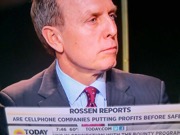

“But the technology already exists. They’ve been doing it in the U.K. for a decade, and in Australia, too, where authorities say it’s working; smartphone robberies are down. The industry’s response: Let’s wait: It won’t work here until every country joins in. “Let's make sure we get, for example, Mexican service providers, Central American, South America, African, Chinese,” (CTIA’s John) Walls said.”
“Why not start with the U.S.?” Rossen asked. “Why not take the first step here?”
“Because I think the larger problem, the bigger problem is overseas,” Walls said.
But police say Americans will keep getting beaten and robbed as long as the wireless industry continues to drag its feet. (Emphasis added.)
I know there is sometimes little good will between the cellular industry and the TV broadcasting industry due to spectrum issues like incentive auctions, so this is a small chance that NBC’s news operation was tainted by this antipathy. This would be rare, but one must admit the possibility.
Meanwhile, here is a YouTube video giving a similar consumer viewpoint:
CTIA actually has had something on their website about “lost or stolen phones”. “In response to Senator Charles Schumer (D-NY), CTIA-The Wireless Association® President and CEO Steve Largent issued” a statement in August 2011 that deal with what consumers can do to protect the personal information in their phones. It does not deal with discouraging the theft of phones or assaults on smart phone users and lists nothing the industry is actually doing. Indeed it urges “Congress to not impose unnecessary regulations on the wireless industry that would cause unintended consequences.”
This is actually an area where FCC is speaking more about the issue than the industry. In a speech to the GSMA Mobile World Congress (the global forum for GSM-based and GSM-related systems) in February, Chmn. Genachowski said
.Another area of challenge: stolen phones. There has been a sharp increase in the U.S. in thefts of mobile devices, particularly smartphones and tablets, endangering the safety of millions—both physical safety and the safety of the sensitive personal information stored on the device.
I commend the GSMA for establishing a database of phones that have been reported stolen so that those devices can’t be reactivated by someone else. I understand this has helped deter theft in European countries where carriers have signed up.
In the U.S., law enforcement officials are concerned that adequate systems don’t now exist to deter smartphone theft. This is a serious consumer issue, and we are taking it seriously
This afternoon, CTIA released the following YouTube video:
Mr. Walls this time assured viewers that “The industry is aggressively pursuing a technical solution that will render a stolen device useless. We’d like to make sure that happens in the U.S. and overseas markets… I want to remind you that the industry is very, very interested in developing these technical solutions.” He also reminds people they should use passwords. So is the US cellular industry waiting to enhance the safety of US smart phone users until it gets consensus with “Mexican service providers, Central American, South America, African, Chinese” as he said in the Today interview? Why do UK and Australia already have such protection?
I reiterate my view that the cellular industry needs to be more sensitive to consumer issues and not spend all its resources on political games within the Beltway.
Some Possible New Year's Resolutions for the Cellular Industry
As we approach the New Year, here are some constructive suggestions for the cellular industry to think about as New Year’s resolutions. Long time readers will recognize that many have been discussed before in other contexts. Let me state first that I am a long time admirer of the cellular industry, its dynamic growth, and its general record of technical innovation. The cellular industry has also done much to improve public safety through its support for E-911, Amber Alerts, and programs to provide cell phones for domestic violence victims. But this industry has several blind spots as it has accumulated political power and FCC influence comparable to the power formerly held by entities such as the pre-divestiture AT&T, NAB, or the pre-1990 Motorola. sic transit gloria mundi
The purpose of this post is to point out constructively some of these blind spots that appear not to be in basic conflict with the fundamental goals of the industry in the hope that they may reconsider their positions in at least some of these areas. I note that while the main cellular players once were in strong opposition to the bidirectional amplifier/BDA issues now in Docket 10-4, they have moderated their position and appear to be working with responsible BDA manufacturers on technical standards for BDAs that control interference. I hope that similar reexamination is possible in the areas below:
1. Wireless technology innovation. The focus of the cellular industry is that innovation is good, but that the key to innovation is more licensed spectrum for their industry. They are happy with the current level of regulation so everyone should be also. This is clear from CTIA’s comments and reply comments in the Wireless Innovation NOI. They see no need to expedite deliberations of new technology, saying “Simply put, even for good ideas with broad appeal, resolution unfortunately can take a long time notwithstanding the desire of parties to speed the process along”. The fact that the endless drawn out FCC spectrum deliberations stifle capital formation for technical innovators is no concern for mainstream CMRS players with positive cash flow.
But Qualcomm was once a startup in an era when it got its key regulatory decision in 2 years after formation. The CDMA technology that this startup pioneered supplies a major fraction of the 2G market (VZW and Sprint) and is the core of all world’s 3G systems. But this type of disruptive wireless innovation os getting to be impossible due to regulatory stagnation but for the cellular industry and for other spectrum users that compete for cross elastic spectrum. Sadly, the cellular industry is firm with the status quo here.
Wa - harmony (Japanese)

What is the industry doing about this? Are they trying to increase sidetone levels so people don’t shout when using cell phones? Are they trying to make it easier to switch the ringer to a vibrate only/ “manners mode” as in Japan where all carriers have voluntarily agreed that a press of the “#” key toggles the unit to and from vibrate only mode? Are they researching ways for theaters and restaurants where people really want a semblance of quiet to use Bluetooth or a similar link to switch phones automatically to vibrate only? Kudos to Motorola for inviting Dr. Norman to talk on this issue. How much of this type of dialogue is going on now in the industry?
UPDATE
Suggested reading for cellular industry managers: “Wild Night at Philharmonic After Phone Interruption” describing a January 10 incident “in one of the quietest parts of the final movement of a gorgeous New York Philharmonic performance of Mahler's Ninth”.
3. Cell phones use in vehicles. Technology should improve life, not threaten it. In September 2011 NTSB recommended a ban on cell phone use in commercial vehicles (trucks and buses) after investigation of a Kentucky crash that killed 11 people. The industry was silent except for an e-mail message to your blogger saying “The wireless industry … does not oppose legislation that restricts the use of wireless communication by drivers." (This quote was never printed or posted anywhere else as far as can be determined.)
Then in December 2011 NTSB recommended to “ban the nonemergency use of portable electronic devices (other than those designed to support the driving task) for all drivers”. This time CTIA was no longer silent, saying “ As far as talking on wireless devices while driving, we defer to state and local lawmakers and their constituents as to what they believe are the most appropriate laws where they live.” This is not leadership, this is non opposition. If I was involved in a product or service that resulted in death on a regular basis as an unintended byproduct I would be a lot more concerned. Especially since talking in cars is not the main use of cell phones.
The NTSB recommendations are not perfect. For example they do not deal with new technology since all NTSB can do is investigate past accidents. Why doesn’t the industry do something more proactive like start a standards committee, or encourage DOT to start one, that can certify which technologies are safe enough for use in vehicles?
(But kudos to Sprint for breaking with the crowd and being a cosponsor of Oprah’s Oprah’s No Phone Zone website and its “No Phone Zone Pledge”.)
4. RF safety. Most of the cellular industry thinks that the public should be happy with their statements that cellphones meet FCC standards and are therefore safe. A decade ago, the industry fought FCC over the proposal to stop hiding SAR ratings for cell phone models in an obscure unmanageable database. As a previous blog post here has as a headline, “CTIA: Maybe Your RF Safety PR Strategy Isn't Working?” The past year has seen CTIA boycott San Francisco and got to court (with an initial partial victory) over a local ordinance requiring point of sale disclosure of SAR data. (The same data that Verizon Wireless openly discloses on their website for models they sell.)
Perhaps the industry does not want you to know about the secret of OETB65C. Stalin once said, “The people who cast the votes decide nothing. The people who count the votes decide everything.” So the SAR standards for cellphones in Sections 2.1091 and 2.1093 were subject to a notice and comment rulemaking that made 1.6 W/kg the SAR limit. But how is that really determined? In practice through the procedures of OETB65C which gives the manufacturers a lot of leeway as to what spacing from the simulated body they can use for measurements in the body, even if they do not provide a holder that would implement that distance and even if they don’t warn users not to put the device in their pocket. Both Time magazine and your blogger have written about this issue, but there seems denial at both FCC and industry on the issue.
There is no proof that cell phone radiation is dangerous. Indeed, some of the brain cancer claims made as clearly outrageous. (Considering there is no proof that cell phone radiation causes any pathology, why the focus on brain cancer - except that it is a very scary diagnosis.) But the web site of CTIA’s French counterpart is a lot more pragmatic than US industry sites on the risks and unknowns as well as the fact that some users may want to take extra precautions. The Swiss counterpart of EPA also has a site with pragmatic and practical information lacking in industry and government sites in the US.

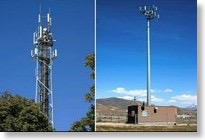
This month’s IEEE Spectrum reports on a UK design contest for power pylons sponsored by a major electric utility, a national government agency, and the architect’s professional society, which resulted in several novel designs including the one above. Why can’t the US cellular industry help sponsor a similar contest for bold new ideas in base station design? The cost would be small compared to what they are spending on they lobbying war with the broadcasters as present.
6. “Spectrum scoring” or “How to count to 500”. The cellular industry originally demanded 800 MHz of new spectrum for CMRS although they are now accepting of the 500MHz NBP goal. But what spectrum counts towards the 500 MHz goal? Does every single Hertz have to be only in spectrum that meets standards developed in Europe to be manufactured in China? There are many types of wireless innovation other than making iPhone and iPad clones. Some of them involve using spectrum more efficiently. The focus on meeting international standards means that only innovators who want to plow through the complex international standards process can get market access in the US. Actions like PacTel’s decision to go with CDMA in the 1980s apparently is beyond consideration now.
While your blogger has no views against giving more spectrum to CMRS, many of us think the 500 MHz goal is impossible under the conditions for “counting” that the cellular industry has implicitly set with factors like nationwide 24/7 1000 ms/s access and in 3GPP specified bands. Although LTE systems can use unpaired spectrum, most of the spectrum on their wish list appears to be paired and symmetric. If FCC and NTIA come up with spectrum that doesn’t that meets all these criteria, does it “count”?
But here is another viewpoint: Some niche markets compete for spectrum at FCC that is the same or comparable spectrum to what the cellular industry seeks. For example the medical community is clearly seeking more spectrum for short range applications. It is clear to many of us, even some in FCC, that the existing use of wireless microphones in UHF TV band “white space” is not sustainable in the long term except perhaps for uses involving only a few microphones like small churches and conference rooms - not theaters and major concerts. This is because of cellular industry pressure for UHF incentives auctions that will eventually tie up the same spectrum.
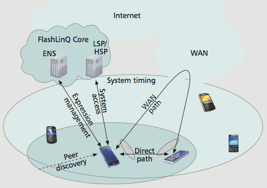
In the past, there was no alternative for the CMRS industry to serve these and other wireless niches. However, with the spectrum leasing provisions of Subpart X of Part 1 and today’s femtocell technology it is possible for cellular carriers to lease short range spectrum to users with other than standards cellular modulations/physical layers and without connection to the public network. A good example is the Qualcomm FlashLinq™ technology that will allow users to connect directly to each other with non standards modulations on spectrum leased from and under the control of a CMRS carrier. Maybe the specifics of FlashLinq™ are not perfect for the CMRS community, but it clearly shows the feasibility of new types of spectrum use in CMRS spectrum. Even if it is not a billion dollar market, its ability to “soak up” other spectrum uses that would otherwise compete for spectrum might make it attractive to openminded CMRS firms.
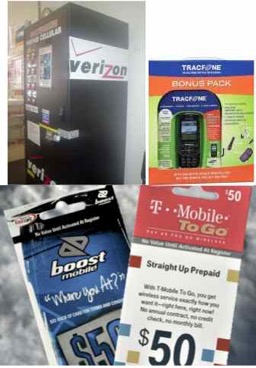
Until recently, the largest prepaid operator, TracFone, allowed users to activate a phone bought anonymously and “skip” the step to report name and address. However, the option of buying with cash bagfuls of prepaid phones at Walmart, activating them over the web with a false name and address, and selling them for criminal use is still quite real. Isn’t it odd that we more concerned about over-the-counter sales of Sudafed and Plan B than we are about bagfuls of anonymous cellphones?
Many countries require some identification before prepaid phones can be activated. This is a complex issue both because of the size of the market and the appeal of prepaid phones to market sectors who need them for legitimate economic and safety-related reasons but, as we know from the voter ID controversy, may lack or be unwilling to identify themselves in the standard ways. While I sincerely hope we never have a cellphone-related IED attack in this country, such an event would force a PATRIOT Act-like knee jerk reaction that could be more draconian that a deliberate process now to address the situation.
UPDATE
For those of you who wonder about the temerity of an industry outsider raising such questions about the cellular industry, let me point out the Verizon $2 “payment fee“/“convenience charge” kerfuffle that started just as this blog was first posted and ended a day later. Clearly, VZW, the largest cellular carrier in the US was out of touch with its customers on this issue and had to beat a hasty retreat. Perhaps the industry is also out of touch on the above issues?
UPDATE 2
On 1/7/12 CNN posted an article by bestselling author Bob Greene entitled “Is 2012 the year to hang up the phone?”
Story highlights:
There is growing chorus of officials, employers urging less cell phone useHe says NTSB warns against use in cars; bosses pushing back on personal calls at workHe says cell-phone distractions even affect surgeons and nurses; cut productivityIt may be impossible to take people's freedom of cell use away from them
So your blogger is not the only one seeing cell phone use backlash. Perhaps if the industry was more sensitive to the concerns listed above it might be in their own interest?
"No call. No text. No update. Is worth a human life" -- NTSB Chmn. Hersman

“According to [the National Highway Traffic Safety Administration], more than 3,000 people lost their lives last year in distraction-related accidents,”she said. “It is time for all of us to stand up for safety by turning off electronic devices when driving.”
The NTSB’s recommendations urge all 50 states and the District ”to ban the nonemergency use of portable electronic devices (other tha
n those designed to support the driving task).”
Here is the recommendation from the NTSB site:
To the 50 states and the District of Columbia:
(1) Ban the nonemergency use of portable electronic devices (other than those designed to support the driving task) for all drivers; (2) use the National Highway Traffic Safety Administration model of high visibility enforcement to support these bans; and (3) implement targeted communication campaigns to inform motorists of the new law and enforcement, and to warn them of the dangers associated with the nonemergency use of portable electronic devices while driving
Readers are reminded of a previous post here entitled “CTIA Mum on NTSB Cellphone in Truck Recommendation”. Shortly after that post
we heard from CTIA:
Actually, we did have a statement. Here is a statement to attribute to John Walls, vice president of public affairs for CTIA--The Wireless Association:
"Accidents that involve any of the numerous driving distractions are unfortunate, and those resulting in loss of life are tragic. The wireless industry has been educating drivers about the dangers of distracted driving for more than a decade, and does not oppose legislation that restricts the use of wireless communication by drivers."
At the time of the blog post a search of the CTIA website for "NTSB" gave no hits at all. It still gives no hits.
Mr. Walls' quote is not available on either the CTIA blog or under press releases. Indeed, a search for the words in the statement had not hits on the CTIA site strongly implying it was not publicly available.
So we welcome this statement that the industry "does not oppose legislation that restricts the use of wireless communication by drivers". However the current CTIA position statement on safe driving does not have Mr. Walls’ general concept of nonopposition to driver restrictions - it only deals with manual texting and “younger drivers”. Let’s hope that CTIA continues to move away from opposing safety-related restrictions and even actually supports the new NTSB recommendation.
CTIA’s Steve Largent issued the following statement:
“CTIA and the wireless industry agree that when drivers are behind the wheel, safety should be their number one priority. Manual texting while driving is clearly incompatible with safety, which is why we have historically supported a ban on texting while driving. As far as talking on wireless devices while driving, we defer to state and local lawmakers and their constituents as to what they believe are the most appropriate laws where they live.
“The wireless industry remains focused on educating consumers about their responsibilities when they’re driving, especially inexperienced drivers. We’re proud of our partnership with the National Safety Council that focuses on teens and novice drivers that tells them ‘On the Road, Off the Phone.’ As part of the partnership, we developed a TV and two radio public service announcements (PSAs) that have been viewed and heard by millions.
“In regards to NTSB’s recommendation number 12, we have always encouraged the industry to continue to develop new technology-based tools and offerings that are affordable and consumer-friendly that would create safer driving. The industry constantly produces new products and services, including those that can disable the driver’s mobile device.
“We remain dedicated to educating all consumers to ensure when they are behind the wheel, safety is their top priority.”
This is the first time CTIA has ever mentioned NTSB on their website.

Opening Statement December 13, 2011 Highway Accident Report: Multi-Vehicle Collision Gray Summit, Missouri, August 5, 2010
Closing Statement
Washington Post op-ed “Why we should ban drivers from using portable electronic devices” 12/16/11
CTIA Mum on NTSB Cellphone in Truck Recommendation
To the 50 states and the District of Columbia:
Enact legislation to prohibit cellular telephone use by commercial driver's license holders with a passenger-carrying or school bus endorsement, while driving under the authority of that endorsement, except in emergencies.
In its investigation, NTSB made this finding:

While CTIA recently had plenty of time to make 2 blog posts (1 2) responding to NAB’s latest tirade on the silly FM chip in cellphone issue, more than a week after the NTSB recommendation to ban cell phone use by truckers CTIA remains silent on the issue. (Note that your blogger has repeatedly agreed with CTIA on this relatively minor issue.) Indeed, the CTIA image machine was able to get the first blog post on the FM/cellphone issue out the very same day as NAB’s statement and the second the next day. Both with matching tweets!
The cellular industry does many good things in our society and can be generally proud of its public service record. But the issue of cell phone use in driving is a real public safety issue where CTIA has focused solely on texting and “inexperienced or novice drivers” -- putting it on the other side of the issue from both DOT and NTSB.
Perhaps CTIA feels that if it ignores the NTSB recommendation it will go away. Note that his view is not monolithic in the cellular industry. Sprint continues to be a sponsor of Oprah’s No Phone Zone program.
So, FCC and other CTIA members: Is the marginal revenue gained by ignoring distracted driving and lobbying against regulations to control it really worth it? Does it really have to diminish your other good works?
DOT video on dangers of distracted driving
Video from Oprah on distracted driving
UPDATE
Shortly after this post went up, we heard from CTIA:
Actually, we did have a statement. Here is a statement to attribute to John Walls, vice president of public affairs for CTIA--The Wireless Association:
"Accidents that involve any of the numerous driving distractions are unfortunate, and those resulting in loss of life are tragic. The wireless industry has been educating drivers about the dangers of distracted driving for more than a decade, and does not oppose legislation that restricts the use of wireless communication by drivers."
At the time of the blog post a search of the CTIA website for "NTSB" gave no hits at all. Nor was Mr. Walls' quote available on either the CTIA blog or under press releases. Indeed, a search for the words in the statement had not hits on the CTIA site strongly implying it was not publicly available.
So we welcome this statement that the industry "does not oppose legislation that restricts the use of wireless communication by drivers". However the current CTIA position statement on safe driving does not have Mr. Walls’ general concept of nonopposition to driver restrictions - it only deals with manual texting and “younger drivers”. Let’s hope that CTIA continues to move away from opposing safety-related restrictions and even actually supports the NTSB recommendation.
The Cellular Industry's Ongoing PR Problem

The above Google search result summarizes the ongoing PR problem for cellphone industry. Yes, there is no proof that cellphones cause cancer or any other pathology and your blogger has no better information or even strong feelings. But the PR strategy taken by the industry, apparently driven by the goal of minimizing liability in any future litigation is that since cellphones meet all present government standards there is nothing to worry about. Trust the government and trust the cellular industry. A CTIA website says:
Leading health organizations, such as the National Cancer Institute, the World Health Organization, the American Cancer Society, and government agencies including the Federal Communications Commission and the U.S. Food and Drug Administration agree that the weight of the scientific evidence has not linked the use of wireless phones with any health problems, including cancer. However, it is also generally agreed that more definitive research should be conducted in areas such as children's use and long-term use.
The same website, which is rather hard to find, goes on to say:
What can I do to reduce my exposure to RF?
It is important to remember every cell phone in the United States must comply with the FCC's safety standards, and that there are no known risks from being exposed to RF emissions from cell phones. Still, if you want to take steps to further lower your exposure, you can use an earpiece or a headset. You may also use the device's speaker function, keep your wireless device away from your body when it's on, or limit the amount of time you hold the cell phone next to your head. Some marketers offer shields they claim protect a user from RF energy. Since there are no known risks from being exposed to RF energy emitted by a cell phone, there's no reason to believe such shields reduce risks. In fact, the Federal Trade Commission has successfully prosecuted shield manufacturers for false and misleading claims.(emphasis added)
Thus while trying to tell you how to reduce exposure, they get sidetracked on telling you it doesn’t matter and watch out for scam artists who sell ineffective “shields”. Yes, “shields” are ineffective because they really don’t work and function mainly to produce income for their promoters - not because there is not necessarily a valid reason to reduce exposure.
Perhaps readers are bored of me comparing CTIA’s position with that of its French counterpart, AFOM. So here is another viewpoint, this time from the Swiss government’s Federal Office of Public Health:
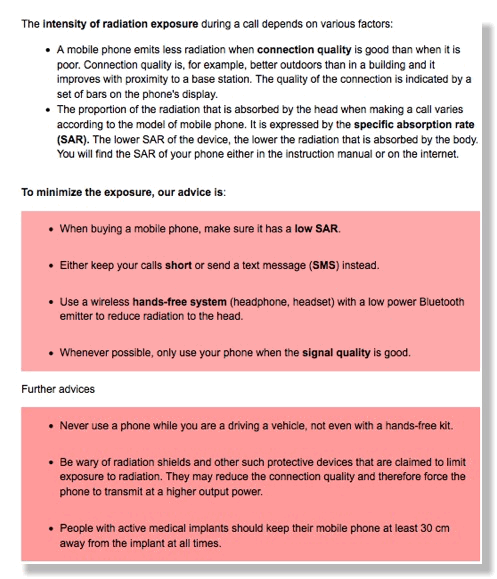
Doesn’t this make more sense that the present CTIA website or the FCC’s information (which was mysteriously changed without any public explanation last year to delete the suggestion that lower SAR might decrease exposure)?
When the new WHO report on cancer was released, I noticed a commentator on NBC’s Today show, the most popular morning show in USA, say that you have to put this in perspective: clearly more people get killed in cellphone-related car crashes than cancer. With that in mind, the nonpartisan Congressional Research Service recently updated its report Text and Multimedia Messaging: Emerging Issues for Congress:
According to the U.S. Department of Transportation, approximately 16% of fatal automobile crashes and 80% of all crashes in 2008 were caused by distracted driving. While reading and composing text messages while driving is only one of numerous factors that can lead to distracted driving, such activity is a growing concern among safety and regulatory groups. In response to this concern, there have been various actions taken at the federal and state levels.
Note that this “action” does not include recent federal legislation as CTIA has effectively derailed all bills on this topic in both the current and previous Congress. Bravo!
Finally, could things get even worse for the industry’s lawyer-driven PR strategy?
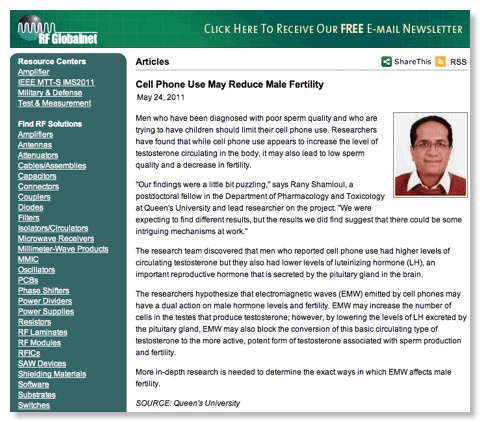
Note that this is not from some “tree hugging” environmental group or antitechnology group, but is the most popular story today on an advertiser-supported wireless “techie” website RF Globalnet.
Extremism on Both Sides of Cell Phone RF Safety Issue
Key Points to Appreciate:
* The independently funded Hardell re-analysis study confirms the flaws of the industry-funded Interphone study and confirms that cell phones cause brain tumors.
* No longer can Interphone researchers claim 'error and biases' in their work prevent a 'causal interpretation', thereby diminishing the gravity of the industry-funded study's results that did show risk, and giving pause to public health officials globally.
Note the line: “The independently funded Hardell re-analysis study... confirms that cell phones cause brain tumors.”
Similar information was repeated in the ElectromagneticHealth.org website which stated
In conclusion both studies showed a statistically significantly doubled risk for glioma at the same side as the mobile phone had been used for 1,640 hours or more; Örebro study OR 2.18, Interphone OR 1.96. Similar results were thus obtained in both studies if the same criteria were used in the analysis, that is type of phone (only mobile), cumulative number of hours for use, age group, and anatomical localisation of the brain tumour compared with exposure to microwaves from the mobile phone.
But in considering the reliability of ElectromagneticHealth.org, note that they previously previously stated on its website:
Illness linked to electromagnetic radiation exposure include many cancers, neurological conditions, ADD, sleep disorders, depression, autism, cognitive problems, cardiovascular irregularities, hormone disruption, immune system disorders, metabolism changes, stress, fertility impairment, increased blood brain barrier permeability, mineral disruption, DNA damage and much, much more.
While your blogger is not totally convinced that all cell phone use is safe, he also is dubious about any claim that it is related to so many different pathologies. Nevertheless this is a growing number of people who are concerned, justly or not, about a possible link between cell phone use and illness.
Now let’s look at the other side, CTIA. CTIA does not consider RF safety as one “of the topics that are shaping the industry” or as worthy of a policy paper. However, a search of the CTIA website finds Consumer Info on “Wireless Phones and Health” as well as 2 press releases on its battle with San Francisco on SAR information. The Consumer Info links to the Interphone study -- the design of which Prof. Hadell is questioning above. Then it has the following statement:

The link to the FDA website may have once pointed to that quote, but it does not now. Nor can it be found with the FDA’s search engine. Perhaps, like FCC on SAR, FDA has secretly modified its position. The most explicit statement on cell phone safety I could find on the FDA site was
Under the law, FDA does not review the safety of radiation-emitting consumer products such as cell phones and similar wireless devices before they can be sold, as it does with new drugs or medical devices. However, FDA does have the authority to take action if cell phones are shown to emit radiofrequency energy (RF) at a level that is hazardous to the user. In such a case, FDA could require cell phone manufacturers to notify users of the health hazard and to repair, replace or recall the phones so that the hazard no longer exists.
So instead of saying cellphones are safe, it says FDA could “take action” if they found them “hazardous to the user”. Not quite a positive statement of safety.
Of course, the CTIA site also contains information about their battle with San Francisco including an announcement of their July 23, 2010 filing of a lawsuit against the City of San Francisco for requiring reasonable consumer information on SAR levels of cell phones sold in their city. CTIA states
“The FCC has determined that all wireless phones legally sold in the United States are ‘safe.’ The FCC monitors scientific research on a regular basis, and its standard for RF exposure is based on recommended guidelines adopted by U.S. and international standard-setting bodies. Furthermore, according to the experts at the U.S. Food and Drug Administration (FDA), the available scientific evidence shows no known health risk due to the RF energy emitted by cell phones. As the FDA states on its website, ‘[t]he weight of scientific evidence has not linked cell phones with any health problems.’
CTIA also has information about their boycott of San Francisco as a convention site. So there is information about a lawsuit and a boycott and the statement that “The FCC has determined that all wireless phones legally sold in the United States are ‘safe.’”. No credible information on RF safety or suggestions on how users might want to reduce if they don’t totally trust the federal government. I am not sure what newspapers CTIA leadership reads, but mine indicate that outside the Beltway not everyone trusts the federal government.
Vague government statements about lack of proof that cellphones cause disease may not have universal acceptance in a country where almost 20% of the population think the President is a Muslim.
It is ironic, that with the peaking of cellphone voice minutes last year as reported by FCC, the total RF exposure of the US public may be decreasing since mobiles used in the rapidly expanding texting, video, and web surfing modes result in lower SAR exposure and are actually subject to a higher SAR limit since mostly the hand is exposed. It is also ironic that the growing use of Bluetooth handsfree headsets are also decreasing public exposure. CTIA’s French counterpart, AFOM, is telling the French public about this and providing practical suggestions to decrease exposure - not hiding behind government findings that everything is safe. CTIA seems content with lawsuits and boycotts.
Your blogger feels that both sides are taking irresponsible positions here while we wait for more reasoned analysis and research. FCC’s recent mysterious change of position on SAR is also not helping productive dialogue. Perhaps the new year will bring more reasoned discussion and dialogue on this issue.
Time Magazine on Cell Phone Safety: The Hidden OET Bulletin 65 Supplement C Problem

An article by columnist Mark Scherer entitled “Cell-Phone Safety: What the FCC Didn't Test” is in this week’s Time magazine. It points out
FCC testing regulations notably chose not to simulate a situation in which the phone was broadcasting at full power while inside a shirt or pants pocket flush against the body, an odd oversight given the known habits of many cellular-phone users. As a matter of physics, radio-frequency energy generally increases sharply as distance is reduced. "The exposure is definitely related to distance," says (retired FCC RF safety expert Robert) Cleveland.
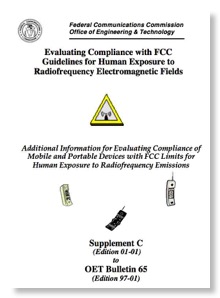
The provisions Mr. Scherer was writing about are on p. 41-2 of OETB65C. They say:
Body-worn operating configurations should be tested with the belt-clips and holsters attached to the device and positioned against a flat phantom in normal use configurations. ... Both the physical spacing to the body of the user as dictated by the accessory and the materials used in an accessory affect the SAR produced by the transmitting device. ...Body-worn accessories may not always be supplied or available as options for some devices that are intended to be authorized for body-worn use. A separation distance of 1.5 cm between the back of the device and a flat phantom is recommended for testing body-worn SAR compliance under such circumstances. Other separation distances may be used, but they should not exceed 2.5 cm.
An phantom used for SAR measurements.
Simulated cavity is filled with special liquid
to simulate body’s electromagnetic qualities.
Cell phone tested is under body cavity.

The above quote from OETB65C essentially allows the device manufacturer to assume a distance from the body of 1.5-2.5 cm (0.59-0.98 inches) even if they do not provide any holder that keeps it that far from the body. Mr. Scherer describes this as “an odd oversight given the known habits of many cellular-phone users.” Someone who was involved in the writing of this document told me that it was not an “oversight”, but rather strong industry pressure on senior OET leadership at the time that resulted in the “apparent oversight”. Since this document was not written in a rulemaking, there is no paper trail and no transparency. Why determine the SAR limit in a rulemaking if you can nullify much of it in a document such as OETB65C?
Indeed, don’t a lot of people carry cell phones, Blackberries, and iPhones in their pockets? In view of the FCC’s recent interest to help inform the public about SAR by writing a whole consumer fact sheet entitled “SAR For Cell Phones: What It Means For You”, isn’t it odd that the need to maintain the same spacing as used in SAR testing is essential is never mentioned therein?
So suggestions for FCC to think about in this area:
- Maybe OETB65C, and the other parts of the OETB65 series, should be revised at least once a decade?
- Maybe the FCC/CGB fact sheet recently issued to explain SAR should also point out that the SAR measured to be in compliance with FCC rules is not meaningful unless the consumer actually uses the phone with the body separation that was assumed.
- As previously stated in this blog, maybe the FCC/CGB fact sheet should also point out that Blackberries/iPhones used in the “typing” mode are subject to a higher SAR limit of 4.0 W/kg so that there is a significant safety margin when they are used in this mode. SAR measurements in this mode are not normally made available to the public in a convenient form.
- FCC/CGB and CTIA might want to think about making more pragmatic information available about decreasing exposure from cell phones - it isn’t proven harmful, but it certainly isn’t doing you any good. The graphic below is from a web site operated not by a radical environmental group, but from AFOM - the French counterpart of CTIA. In this case it points out simply and clearly that cell phones operate at maximum power, hence maximum SAR, in areas with weak signals and that health authorities suggest using your phone in strong signal areas preferentially. Of course, carriers with poor signal coverage - and hence higher operating SARs in their customer’s phones - might prefer that the public not know this. However, a Bluetooth headset will reduce SAR even in this case.

FCC/CGB Secretly Flip-flops on Decade Old SAR Policy
This week there were some unannounced odd changes on the FCC’s Consumer & Government Affairs Bureau’s website of consumer publications. The changes consisted of a rewrite of the “Wireless Devices and Health Concerns” FCC Consumer Facts and the creating of a new one entitled “SAR For Cell Phones: What It Means For You”.
It seems likely that these changes were requested off the public record by CTIA to bolster their case for their law suit with San Francisco over SAR disclosure at retail stores that sell cell phones. First the changes.
The old “Wireless Devices and Health Concerns” FCC Consumer Facts has now disappeared from the FCC website, but thanks to Google’s caching feature it could be still be found in cyberspace for a few days after the change. It is shown below and linked to the copy that was lurking in the Google cache: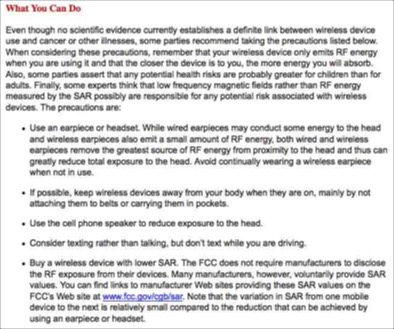
In the old version FCC advises consumers to consider “buy(ing) a wireless device with lower SAR”. This concept goes back to 2000 and was implemented by Chmn. Kennard after the UK adopted a similar policy. At the same time, over CTIA’s strenuous objections, FCC greatly simplified the access to SAR data on its website. (The data had always been there, but it was nearly impossible to find prior to the Kennard directed change to make it more accessible.)
Here is the new version of the fact sheet. Notice the changes?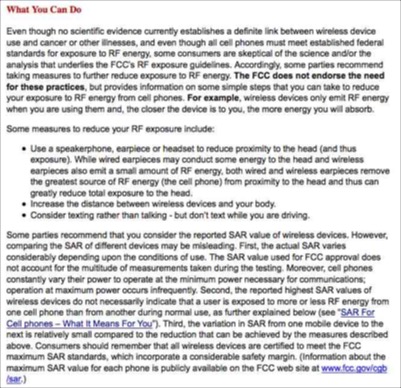
The “Recent Developments” section of this fact sheet has no information about any change or justification thereof. The CGB homepage has no mention of this topic.
In the new fact sheet, the phrase “some parties recommend taking the precautions listed below” has been replaced with “even though all cell phones must meet established federal standards for exposure to RF energy, some consumers are skeptical of the science and/or the analysis that underlies the FCC’s RF exposure guidelines.” Perhaps will this secretive manipulation of FCC viewpoints, more consumers will be skeptical.
Most significantly the sentence “Buy a wireless device with lower SAR” has disappeared. Then a new paragraph beginning with “Some parties recommend that you consider the reported SAR value of wireless devices” has been added. Who are those “some parties”? Didn’t they include the FCC a mere week ago? Hasn’t this been the FCC position for a decade? Why the sudden change?
CGB has also created, without fanfare, a whole new fact sheet entitled “SAR For Cell Phones: What It Means For You”.
This new fact sheet has a section What SAR Does Not Show. It tries to fuzzify the SAR data by saying
“The SAR value used for FCC approval does not account for the multitude of measurements taken during the testing. Moreover, cell phones constantly vary their power to operate at the minimum power necessary for communications; operation at maximum power occurs infrequently. Consequently, cell phones cannot be reliably compared for their overall exposure characteristics on the basis of a single SAR value for several reasons (each of these examples is based on a reported SAR value for cell phone A that is higher than that for cell phone B)”
I agree with the statement
For users who are concerned with the adequacy of this standard or who otherwise wish to further reduce their exposure, the most effective means to reduce exposure are to hold the cell phone away from the head or body and to use a speakerphone or hands-free accessory. These measures will generally have much more impact on RF energy absorption than the small difference in SAR between individual cell phones, which, in any event, is an unreliable comparison of RF exposure to consumers, given the variables of individual use.
But the attempt to say SAR doesn’t matter at all is bizarre. While one can not meaningfully compare cell phone model A on AT&T’s network with cell phone model B on T-Mo’s based on SAR data, if you are the customer of a specific cellular carrier it is meaningful to compare the SARs of the phone models they offer - if you use your phone without a Bluetooth and in the held to the head mode.
Now cell phone voice minutes are now actually decreasing and the major growth in traffic is in digital information not using cell phones next to the ear. Unfortunately, the focus in this discussion on the head SAR measurement points out a real anachronism in the FCC process for dealing with SAR measurements in OET Bulletin 65, Supplement C (last revised in 1/01). Rather than secretly tweaking consumer guidance, maybe FCC should revise its SAR measurements to show the numbers that matter with respect to the growing type of cell phone use - Blackberry/iPhone-like handheld web/e-mail use. Note that 47 C.F.R. 2.1093(d)(2) gives an SAR limit of 4 W/kg for hands and wrists (vice 1.6 for rest of the body) so today’s models probably are significantly less than the safety limit in the modes in which they are used most of the time.
Earlier this month the Environmental Working Group filed a Freedom of Information Act request with the FCC seeking any records that might show whether the Commission is working with CTIA to challenge a San Francisco law that requires retailers to display radiation information of mobile devices at the point of sale. Is the above change a sign that EWG is right about FCC working secretly with CTIA? Why the FCC secrecy about this policy flip-flop? If FCC now thinks that SAR level is unimportant except for compliance with the 1.6 W/kg limit -- isn’t that newsworthy enough for the ever cluttered FCC home page?
UPDATE
EWG Blog
EWG: FCC downplays cell phone radiation risks
Washington Post article
cnet.com (Owned by CBS)
“Despite the FCC's revision, and the CTIA's stance that studies show no link between long term cell phone use and an increased cancer risk, the debate is not going away anytime soon. Indeed the scientific evidence remains inconclusive and until we know more, CNET will continue to advise concerned users to choose a phone with a low SAR in our cell phone radiation charts.”
OMB Watch
Still Gloating Over Their AWS-3 Triumph Over Tranparency, Cellular Establishment Has a Disastrous PR Day

Then at 11 PM came the near 3 minute long piece by Liz Crenshaw entitled “ Cell Phone Radiation: Knowing The Number” that stressed the importance of selecting cell phones based on SAR - the number CTIA tried to keep hidden in the late 1990s. To be fair, the report said that cell phone manufacturers believe that as long as a phone meets FCC standards “there is no reason for concern”
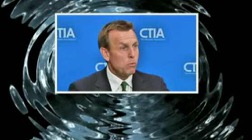
Since CTIA is boycotting the whole City of San Francisco over its SAR disclosure ordinance, should they be consistent and take action now against WRC Channel 4 and possibly its parent, NBC Universal? But since NBC Universal, is in turn owned by GE (at least for the moment) shouldn’t they really retaliate against GE? No more cellular ads on NBC, Telemundo, USA, Bravo, etc. and all CTIA members forbidden to buy GE light bulbs. That’s how CTIA can show GE and its subsidiaries who they are trying to kick around! The citizens of SF are feeling the wrath of CTIA, GE should also.
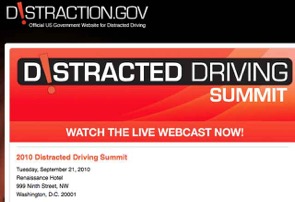
Meanwhile CTIA’s policy on distracted driving appears to be this statement from their website:
CTIA-The Wireless Association® and the wireless industry believe that when it comes to using your wireless device behind the wheel, it’s important to remember safety always comes first and should be every driver’s top priority. While mobile devices are important safety tools, there’s an appropriate time and an inappropriate time to use them.
The wireless industry generally defers to consumers and the driving legislation they support – whether that’s hands-free regulations or bans on talking on their mobile devices while driving.
At the same time, we believe text-messaging while driving is incompatible with safe driving, and we support state and local statutes that ban this activity while driving.
We also agree with proposals that restrict or limit cellular use by inexperienced or novice drivers. Just as many states have graduated drivers' laws, such as restricting the number of passengers or nighttime hours of driving, the industry believes restricting a young driver's use of wireless while becoming better-skilled at the primary driving tasks makes sense.
Sprint Breaks with CTIA Peers to Actively Promote Driving Safety
 Sprint has taken a very different path on cellphone use and driving safety than CTIA and its other large members. On May 4, 2010, Sprint announced
“Five years after creating a free interactive program - Focus on Driving - to educate teenagers on the dangers of driver distraction, Sprint (NYSE:S) is expanding its mission to support two nationwide programs that educate teenagers and adults of all ages on the importance of safe driving in today's wireless world.”
Thus while CTIA believes “ text-messaging while driving is incompatible with safe driving” and supports proposals to “restrict or limit cellular use by inexperienced or novice drivers” it also says “the wireless industry is neutral on outright bans of cellular use while driving and hands-free legislation.” Not only is the CTIA neutral on legislative bans, its public service announcements only deal with teen issues. Thus CTIA does not want to point out any dangers of cell phone use while driving for “experienced drivers”.
Sprint is a cosponsor of Oprah’s No Phone Zone website and its “No Phone Zone Pledge”
Just like VZW should be praised for breaking with CTIA on its view that SAR data should be buried since any FCC approved cellphone is “safe”, Sprint deserves praise from breaking with the “party line” here and focusing of the safety of its customers and the public.
The site cosponsored by Sprint also donates all profits from its sales of merchandise to FocusDriven which “raises awareness and supports victims of motor vehicle crashes involving drivers using cell phones.” FocusDriven will probably not be invited to the CTIA convention - never again to be held in SF - since their site has the following message:
“Each year, thousands of families suffer the loss of loved ones needlessly at the hands of drivers distracted by their cell phones. Whether texting, using hands-free or handheld phones, these drivers not only put their lives on the line, but they risk killing others on the road.
FocusDriven provides victims of cell phone distracted drivers, and their friends and families, with an outlet for sharing their stories. We also provide those interested in this issue with opportunities to get involved.
FocusDriven can help you petition your state legislation; educate your friends, families and coworkers about the hazards of distracted driving; or share your story with state representatives to help support legislation for safer roadways.”
FocusDriven supporters and advocates know, and many have experienced, the very real consequences of drivers distracted by their cell phones. We ask you to make the pledge to not drive distracted, share what you learn on our site with those you know and get involved to help make our nation’s roads safer.

CTIA Locks Horns with San Francisco on Keeping the Public in the Dark on SAR Data

In a _______ (insert your own adjective. Suggested options: decisive, bold, stupid, vengeful, piquish, insane) act yesterday, CTIA-The Wireless Association challenged the City of San Francisco on whether continuing convention business from CTIA was more important than a certain action the elected representatives of the city recently took.
So what was this action that was so worthy of this strong and decisive retaliation from the cellular establishment?
• Were they putting a new tax on cell phones?
• Were they requiring recycling of cell phones?
• Were they regulating the ugliness of cell towers?
• Were they limiting the sale of anonymous prepaid cellphones to drug dealers and gang members?
No, even worse! Here is how the San Franscisco Examiner described SF’s horrific anti-cellular establishment deed:
The city's Board of Supervisors on Tuesday gave final approval to the country's first law requiring cell phone retailers to post the amount of radiation emitted by the phones they sell.
The board voted 10-1 to approve the first-of-its-kind ordinance that requires stores to disclose each phone's specific absorption rate, or SAR.
The measure is backed by Mayor Gavin Newsom, who is expected to sign it within 10 days.
"From our perspective, this is a very reasonable and quite modest measure that will provide greater transparency and information to consumers for whom this is an area of interest or concern," said Newsom spokesman Tony Winnicker, who noted that the mayor is an iPhone user. "We're playing a role that we've often played, which is to be at the forefront of a debate."
Here are the shocking actual words of the SF action:
San Francisco Cell-Phone Radiation Ordinance -
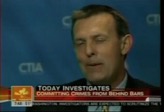
Then, yesterday CTIA retaliated with this announcement:
CTIA-The Wireless Association® Vice President of Public Affairs John Walls issued the following statement after the San Francisco Board of Supervisors approved the cell phone labeling ordinance (File No. 100104):
“CTIA and the wireless industry are disappointed that the San Francisco Board of Supervisors has approved the so-called 'Cell Phone Right-to-Know' ordinance. Rather than inform, the ordinance will potentially mislead consumers with point of sale requirements suggesting that some phones are 'safer' than others based on radiofrequency (RF) emissions. In fact, all phones sold legally in the U.S. must comply with the Federal Communications Commission's safety standards for RF emissions. According to the FCC, all such compliant phones are safe phones as measured by these standards. The scientific evidence does not support point of sale requirements that would suggest some compliant phones are 'safer' than other compliant phones based on RF emissions.
“While we have enjoyed bringing our three day fall show to San Francisco five times in the last seven years, which has meant we’ve brought more than 68,000 exhibitors and attendees and had an economic impact of almost $80 million to the Bay Area economy, the Board of Supervisors’ action has led us to decide to relocate our show. We are disappointed to announce that the 2010 CTIA Enterprise and Applications show in October will be the last one we have in San Francisco for the foreseeable future. We have already been contacted by several other cities that are eager to work with us and understand the tremendous benefits that wireless technology and our show can provide their area.” (CTIA does not explain that large conventions are booked several years in advance and changing the cities after booking incurs large penalties. So it appears that the non-SF venues for the next few conventions must have been decided previously.)
I was particularly fascinated by Mr. Walls’ sentence, “The scientific evidence does not support point of sale requirements that would suggest some compliant phones are 'safer' than other compliant phones based on RF emissions.” Could he please explain how scientific data could deal with “point of sale requirements”. Yes, there is no hard data that “some compliant phones are 'safer' than other compliant phones based on RF emissions.”. But there is no hard data that all cell phone exposure from handsets is safe either!
Readers might wish to review my 11/2/09 entry on this topic and the more responsible position taken by CTIA’s French counterpart, AFOM. I assume that the same physics applies in France as in CTIA’s homeland? AFOM suggests practical ways to reduce exposure such as using a Bluetooth earpiece or using your phones in area with better reception/more “bars”. Indeed, CTIA’s French counterpart even says on its website

For nonfrancophones, AFSSET is the French counterpart of EPA and OSHA and DAS is the term for SAR. Thus my unofficial translation of the header is AFSSET suggests picking a cellphone with low SAR. Shocking!!!
CTIA, does this mean you will add France to San Francisco on your list of boycotted locations for future meetings? Will CTIA staffers be able to attend any ITU or GSMA or ETSI meetings in France? Will CTIA member companies allow their staffers to travel to France on company business? Vacation?
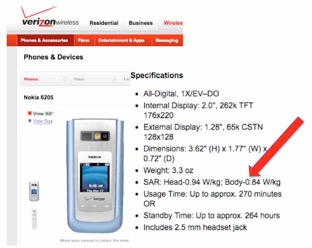
Wired’s coverage of this news ends with these words, “Oddly, iPhone users in San Francisco may be safe, given how difficult it is to actually use the device as a phone in the city proper.”
Tekla Perry, a well known tech writer for IEEE Spectrum and a much better writer than your blogger, has written a blog piece on the SF decision describing how hard it is to get SAR information on cell phones at purchase time. Here is how she ends her essay:
The CTIA, the association that represents wireless manufacturers, is not happy about the San Francisco law, the first of its kind in the country. The CTIA says SAR information is irrelevant, and that no phones are safer than other phones. (I suppose CTIA members would rather compete on camera megapixels and apps and music capacity rather than radiation levels.) So it is going to make San Francisco pay—the CTIA is taking its annual trade show, held for the last seven years in San Francisco, elsewhere.
Wow. That’s like the cheese industry freaking out because they have to list fat grams on their labels.
But I can vote with my feet, too. The next time I buy a cell phone, I’ll be going to a retailer in San Francisco.
UPDATE
On 6/29/10 the Washington Post also wrote about CTIA’s actions. Some quotes:
The last major study done by the U.S. cellphone industry was published in 2002. Citing privacy concerns, corporations have declined to release records of heavy cellphone use to match against incidence of brain tumors.
The issue of children and cellphones has not been widely studied, even as three out of four teenagers use a cellphone. ...
Last month, 13 nations in Europe and Asia released the results of a decade-long study on long-term use. Scientists debated the results, saying the study was flawed because it relied too much on the subjects' memories of how much they used their phones.
The report, funded largely by the biggest global cellphone trade group, said that there was no conclusive link between cellphone use and cancer but that there were "suggestions" that heavy use could increase the risk of glioma. NIH issued a statement after the report's release, emphasizing that the study showed no link.
Anonymous Prepaid Cellphones in the News - Again

Will FCC and Industry Ever Address the Issue?
SpectrumTalk readers may recall that the issue of anonymous prepaid cellphones has been a recurring one. While prepaid operators generally try to obtain user registration information, we have shown that Tracfone gives you the option to “skip this step” and not bother to make up a false name - very convenient to certain demographics. We have also reported that Japan, Greece, and Mexico prohibit anonymous prepaid phones but allow prepaid phones with reasonable documentation. Now let’s add Singapore to the list. During my recent trip there I bought a prepaid SIM for my GSM phone and was subject to a reasonable inquiry of producing my passport so that the name page could be copied.
Prepaid phones are both a profitable business and a useful service in general. But shouldn’t the industry and FCC start asking questions about why anonymous prepaid service is such a good idea? Section 301of the Communications Act requires a license for transmitter use. 47 C.F.R. 22.3(b) says that subscribers can effectively use the operator’s Tittle III license. Should this really apply if the operators have no idea who the subscribers are? Should FCC ask Tracfone how their users could be in compliance with §22.3 if Tracfone has no idea who they are? (A side comment on §22.3: a careful reading shows it is ambiguous whether it applies to all cellular services or just those in Part 22.)
But just banning all prepaid phones is a poor idea because they are especially useful to the lower tiers of society and important for both their safety and to enable access to employment and social services. Any mandatory registration system for prepaid phones has to be flexible enough to balance between legitimate public safety issues and maintaining connectivity for all legitimate users.
But isn’t it time that FCC and industry start a dialogue
on reasonable ways to stop the current flood of anonymous prepaid phones
and their impact on crime and terrorism?
UPDATE
Related story in ars technica
Includes this observation:
The Canadian government funded a study (PDF) on this question back in 2006. A team from Simon Fraser University looked at 24 OECD countries and found that nine of them require mobile operators to collect registration data for prepaid phone users.
"In all cases, the rationale for a prepaid registration requirement was to improve efficiency of law enforcement and national security activities," said the report.
Parade's Gift to CTIA Wireless 2010
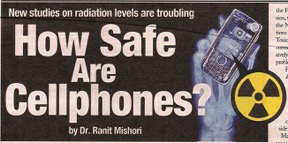
As the moguls of the cell industry gather in Las Vegas for CTIA’s Wireless 2010 conference, Parade magazine, the Sunday insert in many newspapers and the most widely read magazine in the U.S., with a claimed circulation of 33 million and a readership of 73 million has the featured story shown above.
I do not believe that the Parade article reasonably discusses the present situation on safety of cell phones.
But the cellular industry brought this PR disaster on themselves by being in a severe state of denial on this issue and the public’s rightful interest in it. The cellular industry strongly fought Chmn. Kennard’s plan to make SAR data readily available on the FCC website. They did not want the public to have access to which phones have lower SARs.
I have previously contrasted policies of CTIA with its French counterpart, AFOM.
AFOM makes reasonable suggestion on how you can decrease your exposure to RF, why can’t US industry do the same?
Actually RF exposures are probably decreasing in general as operators build out their networks and decrease the average distance to cell towers from users. Broadband uplinks from users could increase exposures, but in reality mobile broadband use is generally asymmetrical with little uplink traffic.
However, the industry’s bold attempt in Docket 10-4 to kill off the cellular amplifier industry because a few poorly designed models cause interference (rather than adopting standards to prevent such designs) will increase exposures in fringe areas.
AT&T Says 'No' to Texting While Driving
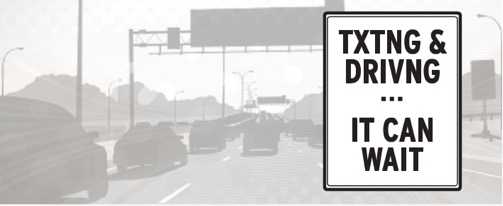
Wireless Week reports:
AT&T today announced a campaign aimed at curtailing the unsafe practice of texting while driving. The carrier hopes to raise awareness about the risks of texting and driving and remind all wireless consumers, especially youth, that text messages can, and should, wait until after driving.
Thus AT&T is breaking with the CTIA crowd and taking a more aggressive stand on the issue. CTIA’s position remains
The wireless industry is neutral on outright bans of cellular use while driving and hands-free legislation. We believe consumers can best determine what laws (bans or hands-free) that they would or would not support related to talking on their devices. At the same time, we believe text-messaging while driving is incompatible with safe driving, and we support state and local statutes that ban this activity while driving.
T-Mobile’s “driving tips” include nothing about texting. The only thing on the subject I could find on Sprint was a link to the horrific YouTube U.K. public service announcement shown below - a bloody example of what texting can result in. This PSA is so horrific that YouTube restricts to viewers over 18 - so it probably has limited impact on users. I could find nothing on VZW’s website on texting and driving.
However, if these firms provide me with links, I would be glad to revise this.
So congratulations to AT&T for making the decision to break from its more conservative competitors and push the safety issue here.
Allstate: "Texting while driving kills. But the real crime is, it's legal."
It goes on to say
“Opposable thumbs helped humans to survive. But in modern times, using thumbs to text while driving could lead to extinction....Join us tomorrow, February 9, at the Allstate Thumbs Up Pledge Event from 11:30 a.m. to 7 p.m. at Union Station to add your thumbprint to the more than 65,000 who have pledged not to text and drive.”
This is in addition to the Allstate website shown below on the issue and a separate one devoted to teenage texting
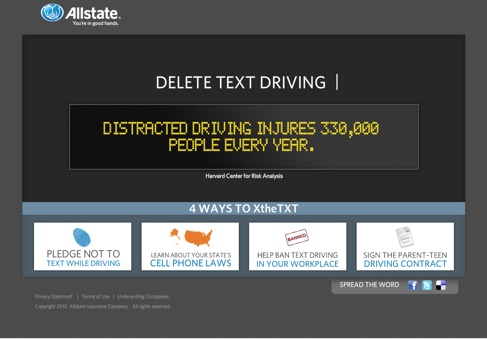
CTIA does have a public service announcement on its website on the teenage issue:
On the Road, Off the Phone
As teens & novice drivers learn the complex task of driving a motor vehicle, safety should always come first. The wireless industry & National Safety Council urge teens to adopt an “On the Road, Off the Phone” philosophy to avoid the dangers of distracted driving”
But CTIA still has this position statement:
The wireless industry is neutral on outright bans of cellular use while driving and hands-free legislation. We believe consumers can best determine what laws (bans or hands-free) that they would or would not support related to talking on their devices.
So it looks like Allstate and the wireless industry have staked out very different positions here.
This is not a new issue. In searching the ever cluttered FCC website for information on it, I found this statement from (then) Comm. Rachelle Chong, who had worked for a major cellular carrier before joining the Commission, to a CTIA meeting in 1997:
“Driving Risks of Mobile Phones
Another potential hot issue for your industry stems from media attention on a recent Canadian study. That study found that drivers who used car phones were four times more likely to have accidents.
In light of this study, I would like to ask the industry to step up your public education efforts about safe driving habits. Stressing the risks involved and the availability of hands free technology would be helpful. I do recognize, however, what a benefit mobile phone users have been for law enforcement officials. They often aid the highway patrol in reporting accidents and reporting road hazards.”

Can the USA Afford the REAL Cost of Anonymous Prepaid Cell Phones?
Prepaid cell phones by themselves are not a problem.
What is a problem is the ease that these phones can be used as anonymous prepaid cell phones.
What is the difference between prepaid cellphones and anonymous prepaid cell phones? There is not physical difference. When you buy a prepaid phone at 7-11, Walmart, etc. you just pay for them as with any other purchase. There is not registration, no ID check, etc. And the phone doesn’t work yet.
Then you have to register the phone with the provider, sometimes a subsidiary of one of the major 4 carriers, sometimes an independent like TracFone, which is actually the largest provider of prepaid services in the US. At that point the provider asks for you identity. But the transaction is done either over the phone or by Internet so it is perfectly easy to give a false identity. But what if you don’t have the time or aren’t creative enough to dream up a false name and address? TracFone is there for you! As the screenshot above shows, the ever thoughtful TracFone has a line on their registration page that says “If you wish to skip this step, please click here”.
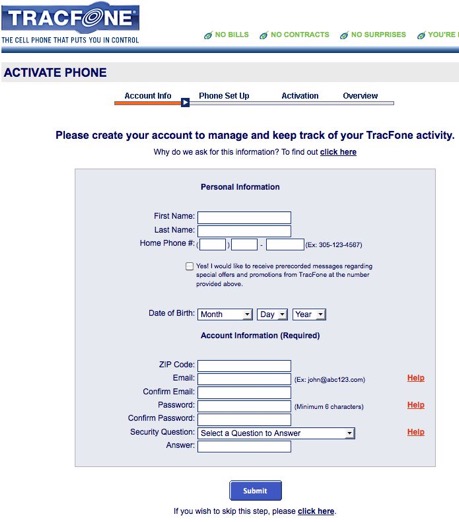
OK so some people want anonymity. Tiger Woods for example. I understand. I am even a card carrying ACLU member. But did you ever Google “prepaid cellphone crime”? You get 88,000+ hits on this combination of topics. Just like on Law & Order, prepaid “throw away” phones are the communications media of choice for criminals.
Overseas, prepaid phones are the media for choice for terrorists too. Indeed, the 2004 Madrid train bombings were detonated by prepaid cell phones.
Other countries have banned anonymous prepaid phones by requiring registration of all users and equipment. Such countries include Japan, Greece, and Mexico.
Now strict registration of cell phones has its downside too. Studies have shown that communications is necessary for homeless individuals to get jobs and back on the road to recovery. Cell phones are also a safety issue and there are users with legitimate safety issues who might not be able to walk into a Verizon Office to offer normal documentation.
But rather than sweeping this issue under the carpet, why don’t we start a dialogue among the cellular industry, law enforcement agencies, and FCC to explore practical ways to control the use of the large number of anonymous prepaid phones.
Video on Prepaid Cell Phones
UPDATE
TracFone no longer uses the form shown that gives users the option to “skip” giving personal information. However, it is not clear if Tracfone requires real information or just accepts whatever input the user types in. If TracFone wishes to address this point we will gladly post their response in full without editorial comment.


 (Does not include readers using RSS feeds.)


![[Valid RSS]](valid-rss-rogers.png "Validate my RSS feed")


